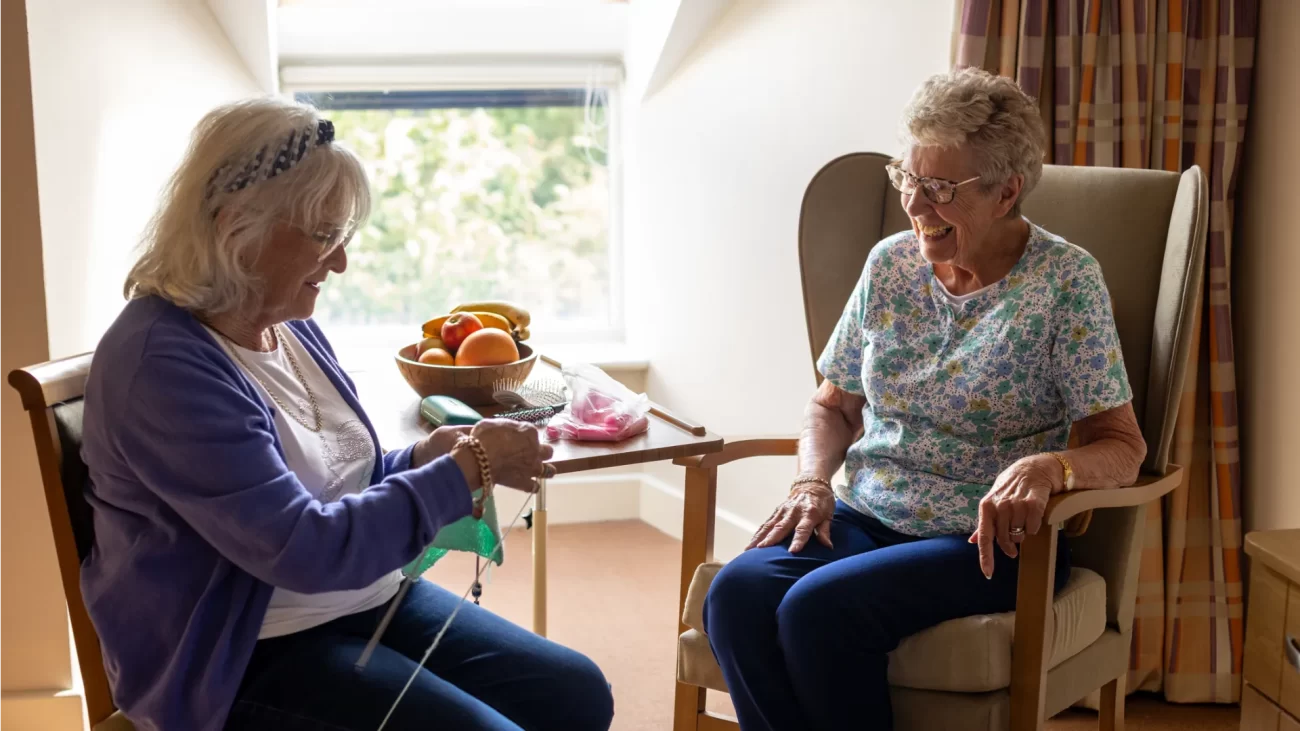
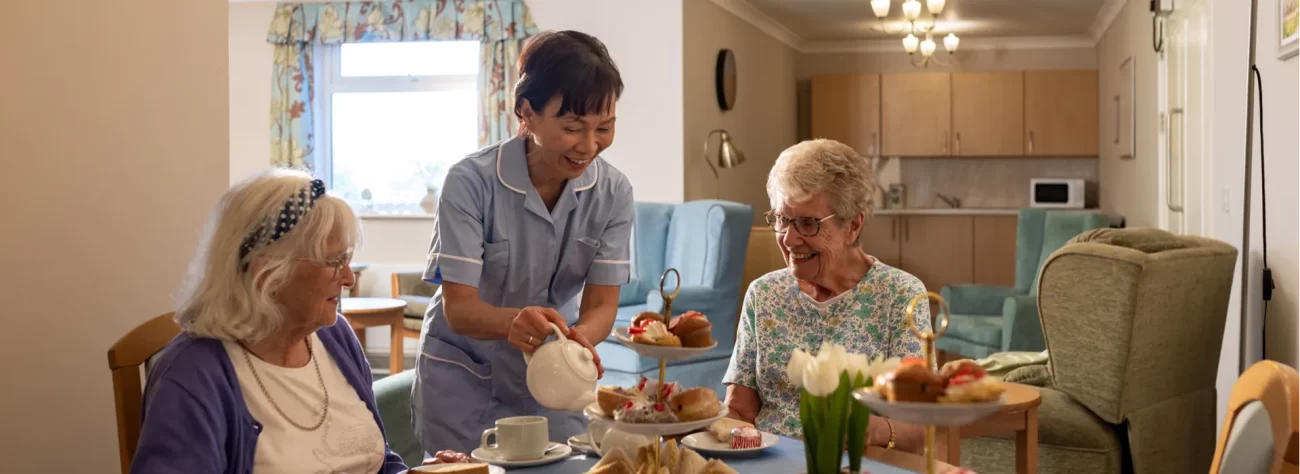
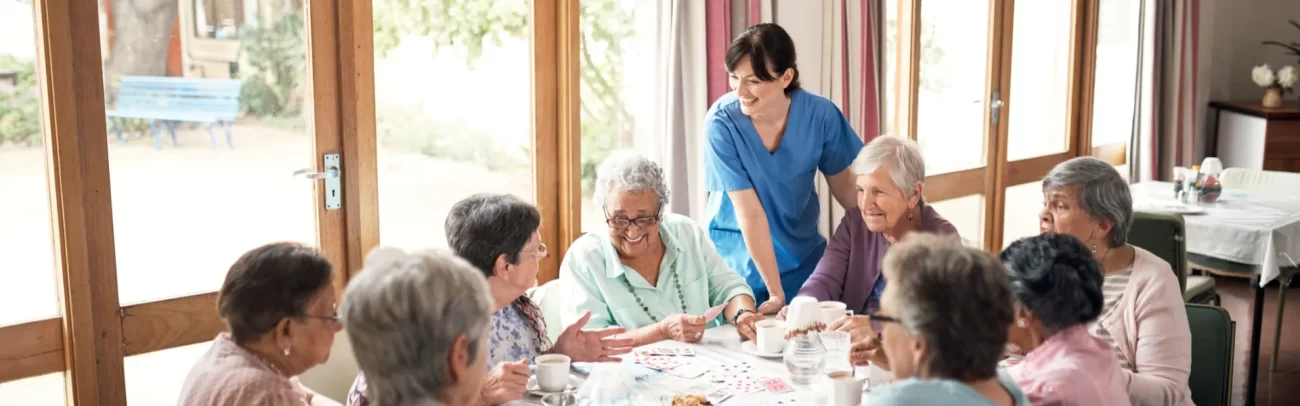
A panel discussion over afternoon tea at Lainston House, Winchester, for care providers getting ready for winter.
Winter rarely brings one dramatic failure to a care home. More often it finds the things nobody has had time to check: the boiler that hasn’t worked hard since March, the pipe that’s been quietly leaking, the equipment that’s fine until a resident’s needs change overnight. That’s why we brought care, operations and property leaders together on Thursday 22 October, to talk through where those risks hide, when a building problem becomes a care problem, and what’s worth doing before the cold sets in.
It was a warm, sunny afternoon, which made it slightly strange to be discussing frozen pipes. But as Emma Heath, CEO of Hampshire Care Association, said when she opened the panel, the weather stopped being predictable a while ago, and business continuity is now a real focus across Hampshire. She was joined by Gemma Kenney, Managing Director at Ocupa; Ed Riches, Support Services Manager at Ardale; and Graham Jenkins, Head of Property & Maintenance at Abbeyfield Wessex. Between them, they covered the resident, the running of the home and the building itself.
It Starts With Something Small
Ed opened with a story from one of his homes, the week before Christmas. An air conditioning unit failed and released enough pressure to set off the sprinkler system. Nobody knew the two were linked. Suddenly there was no heating, a fire safety problem and residents to look after.
“You think you’ve fixed it,” he said. “Then you don’t know about the next two, then the next six. And all of a sudden you have total failure. That’s when it becomes expensive.”
Graham was blunter: nine times out of ten, it’s the heating and hot water. Systems sit idle all summer, October arrives, residents want their rooms “Arctic or Bahamas, nothing in between”, and the sudden demand finds every weak point. His advice is to put your systems under full load now, while it’s still mild, rather than finding out on a frosty December morning when every engineer is booked.
He also told the story that got the biggest reaction of the afternoon: a damp patch the size of a bottle top on a high ceiling. Behind it were four metres of corroded pipework, with the floor above holding water “like a bath”. A corridor closed, hot water off, carpets up and thousands of pounds spent. His rule since: whatever it is, investigate it.
When the Building Becomes a Care Issue
Gemma brought the conversation back to residents. As an occupational therapist, winter is a red flag for her: chest infections, norovirus and hospital admissions. She shared the statistic that ten days in hospital for someone over 80 equates to ten years of muscle ageing. Someone who walked to the lounge before may come back needing all their care in bed, and the home has to find the staff and equipment to manage it.
Her example of what the right kit can change stayed with people. A younger man who’d had a severe stroke was being washed in bed by two carers. He was fully aware of it, and mortified. A tilt-in-space shower chair meant one carer could take him to the shower instead. “It’s not just about the money,” she said. “It’s the quality of life for that person.”
Ed made the point that the building sends a message too. Families are often the ones choosing a home for someone who can’t choose for themselves, and a cold welcome is the first thing they notice. Emma put it more bluntly: “If they’re skimping on this, what else?”
Not Just Winter
The conversation kept coming back to heat. Graham said that once Christmas is past, the question becomes whether homes are summer-ready. Many have no air conditioning, so his team is looking at cool spaces residents can retreat to. Ed said some of his kitchens and laundries reached 45 degrees this summer, with staff working eight-hour shifts in it. There’s already a minimum temperature in the rules, and he thinks a maximum is only a matter of time.
The Question Without an Easy Answer
This was never meant to be a presentation, and the most honest exchange of the afternoon came from the floor. One provider described power cuts across her residential, supported living and nursing services during storms. Priority lists with energy suppliers, she said, “meant nothing. Absolutely nothing.” For ventilated residents, battery backup buys a short window, and a permanent generator is out of reach.
It was the kind of moment Sonja Jueterbock, Home Services Adviser at Shawford Springs Care Home, picked up on afterwards. She “particularly liked the format of the question and answer panel, a very different and a fresh approach.”
Nobody pretended there was a neat solution. Graham builds relationships with other local providers so there’s somewhere to go if a building fails. Ed’s organisation invested in a mobile generator, though he admitted it’s a lot of money for something you hope never to use. Tom Aspital at Aspect Electrical, added two practical options: ask your Distribution Network Operator what timeframe they’ll commit to for support, and look at battery storage alongside solar, which has come down a lot in cost, keeping enough in reserve to cover that window. It’s also worth asking your local council about grants.
“It was great to be in a room full of people who are passionate about delivering excellent care,” Tom said afterwards. “I really enjoyed hearing about the challenges they face and discussing how we can support them.”
What People Took Away
Learn from last year. Go through last year’s reactive maintenance invoices. Graham reckons around 80% of it could have been built into planned maintenance.
Test in the in-between months. March to April and September to early October, before anyone needs the heating or cooling.
Keep BCPs simple. Ed was clear they’re read by whoever is on shift, so make them visual, enough to stop the water, and review them every time something goes wrong.
Prevention over contingency. For Gemma, getting residents up, dressed and moving keeps them out of crisis, and it’s the person-centred approach CQC looks for.
Emma also made an ask of the partners. Most Hampshire providers are small, single-site businesses, often without a BCP or maintenance checklist, where the registered manager is doing it all. Shared, practical resources would make a real difference.
Emma closed by reflecting on the value of simply putting people in a room to share problems and look to each other for answers. Treasa Commins, Customer Relations Manager, summed up the mood afterwards: it was a chance “to meet such dedicated people” working in care.
The partners noticed it too. For Catherine Stratten at Asbury Heating, it was “a great opportunity to meet care providers”, and the way the businesses worked together on the afternoon “worked really well”. Asbury are already keen to be part of the next one.
Thank you to Emma, Gemma, Ed and Graham, to our partners, and to everyone who came and joined in.
Getting Your Site Ready for Winter?
Asbury Heating, Aspect Electrical, Amberley Security, Shepherds, Solent Mobility Centre and JB Refrigeration were all in the room, and each is offering care providers a free check in their area, whether that’s the plant room, the electrics, access control, mobility equipment or cooling. If something in the discussion rang true for your site, get in touch and we’ll connect you with the right person.
Seasonal heating care home checks confirm boilers, pipework and controls are safe before winter. These help care homes maintain safe indoor conditions.
Care home heating partner choice comes down to compliance knowledge, emergency response, records, and planned maintenance that keeps care homes running.
Hot water compliance in care homes is a regulatory requirement. A care home cannot operate safely or compliantly without a working hot water supply today.
Reducing heating breakdowns in care homes needs planned servicing, documented inspections, and lifecycle planning to cut failures and support compliance.
Good energy efficiency in care homes comes from reliable system design, planned maintenance, and effective control. Reduce waste and keep comfort steady.