


Warehouse Heating Solutions Built for UK Logistics Sites
Keeping logistics sites warm, efficient, and operational through every season
Get in touch
Get in touch with us today, and we’ll help to find the right solution for you. We aim to respond to all contact submissions within 48 hours.
Warehouse & Logistics Heating Experts
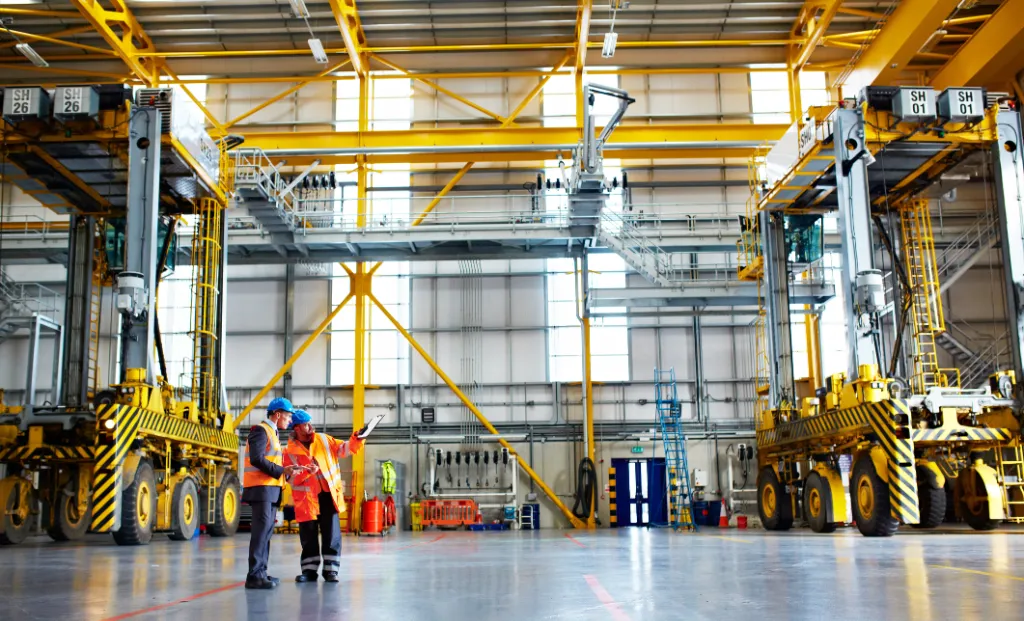
A logistics site running multiple loading bays through a winter shift is one of the hardest buildings to heat efficiently. Every time a bay door opens, conditioned air is lost, and by the time the working floor is warm again, the next cycle has started. The result is high energy spend and a commercial heating system that never quite catches up.
Warehouse and logistics buildings carry heating and energy challenges that general commercial guidance rarely addresses directly. The combination of high ceilings, large open volumes, and loading bays that cycle throughout the working day requires a specification built around how the building actually operates, not one adapted from a smaller premises. We work with facilities managers, operations directors, and site leads to design, install, and maintain warehouse heating solutions that hold their own through winter peak, backed by long-term maintenance contracts and a single technical team from survey to service.
Why Warehouse & Logistics Heating Is a Different Challenge
Warehouses present a combination of conditions that most standard industrial-unit heating specifications do not adequately account for. Ceilings of eight metres or more produce a pronounced stack effect, where warm air rises and pools at roof level while the working floor remains cold. Large open floorplates, often interrupted by racking, disrupt airflow and create uneven temperature distribution across the building.
Loading bays add a further variable. Each time a bay door opens, a significant volume of conditioned air is lost, and in a busy distribution centre running multiple bays across a shift, that cumulative heat loss becomes a material energy cost.
Occupancy patterns matter too. Pick areas, office mezzanines, and welfare facilities each have different conditioning requirements, and a building running shift patterns may need only parts of the space heated at any one time. When temperature-sensitive stock is involved, minimum operating conditions and condensation risk must be factored into the design from the outset.
Commercial boiler installations and ongoing boiler servicing are both part of our warehouse heating offer, so the same team that specifies and installs your system is responsible for keeping it running. The challenges are similar in scale to those of manufacturing site heating, but the occupancy and process loads differ.

The Systems We Install & Service
System type matters as much as the heat source. For warehouse and logistics buildings, we commonly specify the following:
- Warm air heating commercial units for zone coverage and quicker warm-up across large floor areas.
- Radiant tube heaters are used where direct, targeted heat is needed at the working level.
- Destratification fans to recover heat that pools at the roof level and return it to the floor.
- Ambient zoning for buildings with distinct areas requiring different temperature conditions.
- Hybrid setups where a building has mixed zones, such as a pick floor alongside an office mezzanine.
Alongside the primary heat delivery system, we include controls, building management system integration, weather compensation, and dock-door management in the specification. For older industrial units running on tired equipment, a planned upgrade is almost always more cost-effective than reactive replacement.
Compliance & Safety Obligations for Warehouse Operators
Commercial operators in warehouse and logistics environments carry a range of statutory obligations for their heating and utilities infrastructure. Gas safety legislation requires annual checks of gas appliances by a Gas Safe-registered engineer, with records maintained and available for inspection. Where boilers serve welfare facilities, water hygiene obligations under HSG274 apply, and a Legionella risk assessment will be required.
Where new gas pipework is installed, or an existing system has been isolated, gas-tightness testing and purging are required before the system can return to service. We hold CMDDA1 and CMDDA1S certification and provide full documentation on completion for insurance and compliance purposes.
None of this is unusual for a well-run commercial site. Our role is to ensure checks are conducted on schedule, records are in order, and the relevant documentation is available when needed, whether for an internal audit, a landlord review, or a regulatory inspection.


Heating Support for Warehouses That Cannot Afford Downtime
A warehouse heating system that was poorly specified or has been left on reactive maintenance will cost more to run, fail more often, and create operational problems at exactly the wrong moment. The difference between that outcome and a system that performs reliably during the winter peak comes down to two things: getting the design right at the outset and keeping it serviced by the team that installed it. A planned preventative maintenance contract handles both, with scheduled inspections, pre-winter controls reviews, and 24/7 emergency response for registered contract clients. On average, these typically reduce operational costs by up to 30% compared with reactive repair spend.
Asbury Heating has provided heating and maintenance services to commercial clients across Dorset, Hampshire, and Wiltshire for over 60 years. Our engineers are Gas Safe-registered, commercially qualified, OFTEC-qualified for oil-fired systems, and F-Gas-certified for air conditioning. Read more about our accreditations and client testimonials, or speak to the team about a site survey or maintenance contract for your site.
Give us a call on 01202 745189 or contact us via our online form, and we will make sure your warehouse heating is specified, maintained, and ready for whatever the season brings.