


Air Conditioning for Dental Practices
F-Gas-certified cooling for surgeries, waiting rooms, and staff areas across the South of England
Get in touch
Get in touch with us today, and we’ll help to find the right solution for you. We aim to respond to all contact submissions within 48 hours.
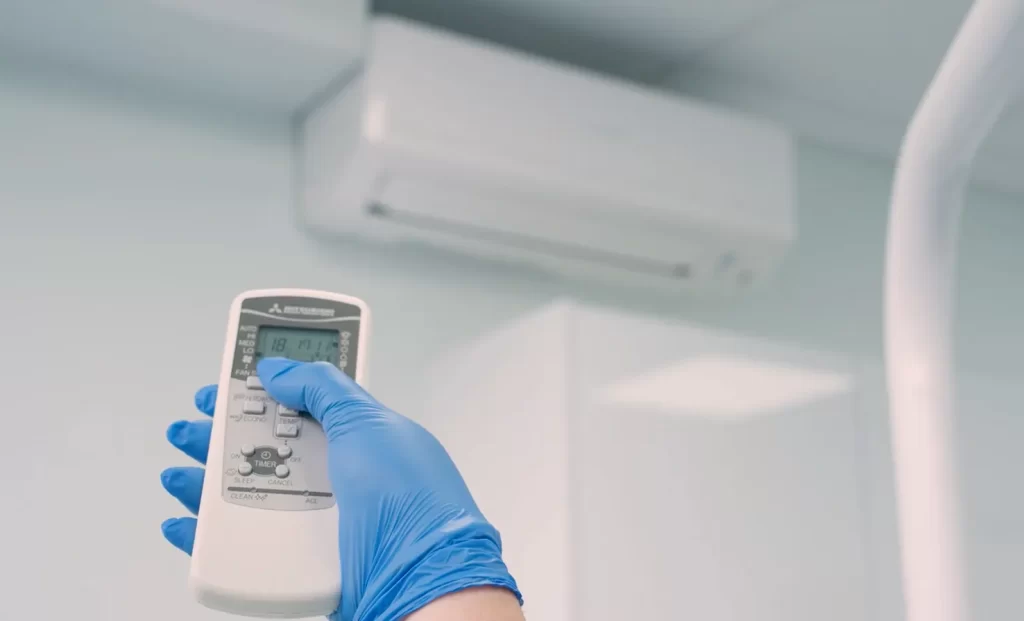
Temperature Control in a Dental Practice Is a Clinical Matter
A surgery that runs warm in summer creates a problem for patients, staff, and the compliance record at once. For any dental practice registered with the CQC, the condition of the physical environment is part of what inspectors assess. Air temperature, air quality, and the maintenance records behind them all sit within the same compliance picture.
A poorly specified or under-maintained unit can make things worse rather than better. One that recirculates rather than conditions air, or has not been serviced since installation, introduces its own infection control risk. Under CQC Regulation 15 of the Health and Social Care Act 2008, registered providers are required to maintain premises in a way that protects service users from the risk of acquiring a healthcare-associated infection. That extends to ventilation and air quality in clinical spaces.
Asbury Heating has worked in regulated commercial environments since 1962, including care homes, schools, hospitals, and clinical facilities across the South of England. We hold F-Gas certification for refrigerant handling, and we bring to dental practices the same compliance-aware approach we apply to any setting where the inspection record matters.

Five Star Reviews
We’re rated five star by our customers on Google. Check out the testimonials from some of our incredible customers by clicking the button below.
The Accreditations Behind Every Dental Practice Contract
A dental practice choosing an air conditioning contractor needs to know more than that the work will be done. It needs to know the documentation will be in order and that the engineer understands what a clinical environment requires of them.
Every engineer we send to a dental practice holds F-Gas certification, which is the legal qualification to install, maintain, and repair systems using fluorinated refrigerants. We are SafeContractor accredited, with our health, safety, and ethical practices independently verified. And we give manufacturer-neutral advice, based on how your practice actually operates, not on what is easiest for us to supply. Here is what we bring to a dental practice contract:
- We hold F-Gas certification for the safe handling of refrigerants across every system we install.
- We are SafeContractor accredited, which means our health, safety, and ethical practices are verified by an independent body.
- We give manufacturer-neutral recommendations, specified for your practice, not a supplier relationship.
Registered contract clients receive 24/7 emergency callout, with an engineer on site within 2 to 4 hours. We document every visit in writing, so your compliance file reflects the work carried out.

We provide Commercial Heating Services to:
Multi-Site Dental Groups Need a Consistent Maintenance Standard Across Every Practice
A dental group operating across several locations cannot carry a different maintenance record and a different compliance approach at each site. The expectation from a CQC inspection is consistency, and the same air quality and servicing standard applies whether the practice is in Bournemouth or Basingstoke. One contractor covering the whole portfolio makes that straightforward to demonstrate.
From Site Survey to a System That Meets the Brief
Here is how an air conditioning contract for a dental practice moves from first enquiry to a fully serviced, compliant installation.

We survey every practice before quoting, because a surgery, a waiting room, and a decontamination room each have different conditioning requirements. A specification that treats the building as a single commercial unit will get the balance wrong.
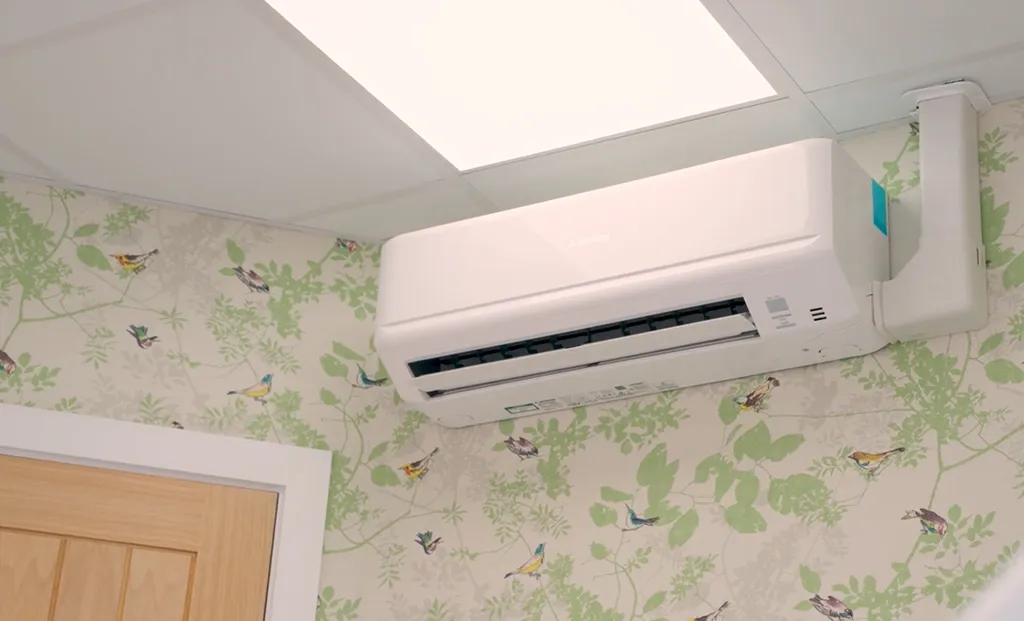
We are not tied to any manufacturer, so whether the practice needs a multi-zone VRF, a discreet split system, or something more specific to its layout, the recommendation is based on how the rooms are used, not on supplier alignment.

Installation work is scheduled around the appointment book, whether evenings, weekends, or phased across non-clinical sessions. This way, patient-facing time is protected throughout.

Every installation is commissioned and handed over with full F-Gas compliance records and any relevant building control sign-off. The paperwork is in your practice file before the system is switched on, not requested afterwards.

Registered contract clients receive 24/7 emergency callout, with an F-Gas certified engineer on site within 2 to 4 hours. One point of contact covers the whole practice, with consistent records on every visit.
Matching the System to the Practice
Under CQC Regulation 15, dental practices are required to maintain premises in a condition that manages infection risk, and that includes how air moves through clinical spaces. A system that is correctly specified and regularly serviced supports that obligation. One that is not creates a compliance gap that may not surface until it is pointed out during an inspection.
No two practices share the same layout, occupancy pattern, or ventilation constraints. The right system depends on how many zones need independent control and how discreet the installation needs to be in patient-facing areas. What the practice can absorb during installation without closing its appointment book matters too. The breakdown below covers the main options.
Independent Control for Every Room with One Outdoor Unit
VRF systems suit practices where the waiting room, surgeries, and staff areas need different temperatures at the same time, without a separate outdoor unit taking up external wall space for each zone. Multi-site groups benefit particularly from the consistency of a single system type across the portfolio.
Effective Cooling Sized to the Practice & Not Oversold
Split systems suit single-surgery practices or those adding conditioning to one specific room, delivering reliable performance without the cost of a multi-zone installation built for a larger building.
Discreet Units That Do Not Affect the Patient Environment
Low-profile, low-noise units keep the visible and acoustic footprint to a minimum in patient-facing areas. In a surgery where clinical calm matters, a poorly placed or audible unit is a problem that shows up in every appointment.
Running Costs That Reflect How a Practice Actually Operates
We install systems with high Coefficient of Performance ratings as standard, so more energy goes into conditioning, and less is wasted. A practice running clinical hours five or six days a week will see that reflected in the energy bill across the year.
Compliance is Managed & Not Added to the Practice Manager’s List
F-Gas regulatory requirements, TM44 inspection scheduling, and documentation relevant to CQC Regulation 15 are managed as part of the contract. That is one less compliance thread for a practice manager already carrying a full administrative load.
What Informs Our Pricing
The cost of an air conditioning contract for a dental practice depends on how many zones need covering, the system type suited to each space, and how often servicing is required to keep the installation compliant and performing correctly. A single-surgery practice on a split system costs less upfront than a multi-zone group site. The specification reflects what the building actually needs.
We build contracts around a clear scope, agreed response times, and pricing that holds once signed. There are no hidden variables introduced after the survey.


Areas We Cover
We provide air conditioning services for dental practices across the South of England, with engineers based locally rather than dispatched from a distant regional office. Keeping travel distances short means faster response times and a consistent engineering team that knows your site.
Our engineers cover:
- Dorset, including Bournemouth, Poole, and Christchurch.
- Hampshire, including Southampton, Winchester, and Basingstoke.
- Wiltshire, including Salisbury, Swindon, and Chippenham.
We also cover East and West Sussex, Surrey, and parts of Devon. So a dental group with practices across more than one county can be served under a single contract, with consistent standards at every site.
A Practice That Stays Cool Keeps Its Compliance Record Clean
A dental surgery that runs warm in summer or relies on a system that has not been properly serviced, is carrying an infection control and compliance risk that will not stay invisible. Getting the specification right and keeping the maintenance record current removes it from the inspection file before anyone asks to see it.
Highcliffe and Christchurch Family Dentistry is one of a number of dental practices across the South of England where Asbury Heating maintains heating, air conditioning, and hot water systems to a standard that supports clinical operations and CQC compliance.
To discuss an air conditioning contract for your practice, call 01202 745189 or request a site survey.
Frequently Asked Questions
CQC Regulation 15 requires registered providers to maintain premises in a condition that protects service users from infection risk, and that includes how air moves through clinical spaces. Air conditioning does not appear in the regulation by name, but an unserviced or poorly specified system that recirculates stale air can create a compliance gap.
Practices are expected to demonstrate that the physical environment, including ventilation and air quality, is actively managed. A correctly specified and regularly serviced system is part of how that expectation is met. To understand whether your current setup supports compliance, request a site survey.
Any engineer installing, maintaining, or repairing an air conditioning system that uses fluorinated refrigerants must hold F-Gas certification under UK F-Gas regulations. This is a legal requirement, not a quality mark, and it is separate from Gas Safe registration. Before appointing a contractor, ask to see their F-Gas documentation and confirm that the individual engineers who will carry out the work are certified, and not just the company.
Asbury engineers hold F-Gas certification as standard across every air conditioning contract.
Most commercial air conditioning systems require a minimum of two services per year. Clinical environments may warrant more frequent attention. The servicing schedule should be documented and available for inspection alongside other compliance records.
A registered Asbury contract includes:
- A pre-agreed annual service schedule, typically spring and autumn.
- Written documentation on every visit, ready for your compliance file.
- 24/7 emergency callout with an F-Gas certified engineer on site within 2 to 4 hours.
A TM44 inspection, the Energy Performance of Buildings assessment required under UK regulations, applies to air conditioning systems with an effective rated output of more than 12kW. It must be carried out by an accredited energy assessor every five years. Most dental practices with a multi-zone or VRF system will exceed that threshold. The inspection assesses whether the system is correctly sized and efficiently controlled.
Asbury manages TM44 scheduling as part of the maintenance contract, so the obligation does not sit as an open item on the practice manager’s list.
Yes, if the system is poorly specified or has not been serviced. Dental procedures generate aerosols, which makes air quality a clinical consideration as well as a comfort one. A unit that filters and conditions the air correctly manages that; one that has blocked filters or incorrect airflow settings does not. The right system, correctly specified for the surgery layout and occupancy, conditions the air. A neglected one introduces its own risk rather than removing it.
Installation work can be scheduled around the appointment book so patient-facing hours are not affected. Asbury agrees the programme with the practice before any work begins, and typically structures it as follows:
- Single-surgery split system installations are usually completed in one day.
- Multi-zone VRF installations are phased across evenings, weekends, or non-clinical sessions.
- The schedule is fixed at survey stage, before a contract is signed.
The right system depends on the number of rooms that need independent temperature control, the layout and size of each space, and how discreet the installation needs to be in patient-facing areas. A VRF system suits practices with several zones requiring different temperatures at the same time. A split system suits a single-surgery practice or one adding conditioning to one specific room.
Asbury conducts a site survey before recommending any system, because a specification drawn up without seeing the building is unlikely to get the balance right.
Yes, a contractor with the right coverage area, accreditations, and engineering resource can manage installation, servicing, and emergency callout across a group’s entire portfolio under one agreement. This is more straightforward than managing separate contractor relationships at each site and makes it easier to demonstrate a consistent maintenance standard, which matters when multiple sites are subject to CQC inspection.
Asbury covers Dorset, Hampshire, Wiltshire, East and West Sussex, Surrey, and parts of Devon, and can bring a multi-site dental group under a single contract with a consistent service record at every location.
An unserviced system loses efficiency over time and, in a clinical environment, introduces an infection control risk as filters become blocked and air quality deteriorates. The compliance problem tends to surface at the worst possible moment. An inspection asks to see the service record, and a gap in documentation is harder to address than the maintenance itself would have been. Regular servicing prevents that, and it keeps the system considerably less likely to fail during a period when the appointment book is full. Practices that treat air conditioning as a fit-and-forget installation typically encounter all three problems in the same season.
Complaints about dry air, draughts, or a sense of being too cold typically point to a system that is oversized for the space, positioned incorrectly, or running at the wrong fan speed. These are specification problems, not inherent drawbacks of air conditioning. Low-profile, low-noise units with appropriate airflow distribution remove those issues before installation, not afterwards. A surgery where the unit is audible or creates a noticeable draught is one where the brief was not written for a clinical environment. That is what the site survey is for.