


Government & Council Heating Services
Statutory compliance and reliable building services for local authority properties across the south of England
Get in touch
Get in touch with us today, and we’ll help to find the right solution for you. We aim to respond to all contact submissions within 48 hours.

Heating & Compliance for A Varied Public Estate
Council buildings range from civic offices and libraries to leisure centres, community halls, and public conveniences. Each has different heating demands, different occupancy patterns, and different statutory obligations. The facilities manager responsible for that estate needs a contractor who can work across the entire estate, not one who excels at a single building type and struggles with the rest.
Managing heating and water safety across a council portfolio means meeting requirements under the Gas Safety (Installation and Use) Regulations, the Health and Safety at Work Act, and L8 (ACoP), while keeping public-facing services running without disruption. That requires documented compliance, consistent service quality, and a contractor who can account for what has been done and when.

Five Star Reviews
We’re rated five star by our customers on Google. Check out the testimonials from some of our incredible customers by clicking the button below.
Commercial Heating Across Council Buildings
Council buildings do not share a heating profile. A leisure centre runs high hot water demand across changing rooms and pool plant. A library needs consistent background warmth across irregular operating hours. A community hall may sit dormant for days, only to require reliable heat at short notice.
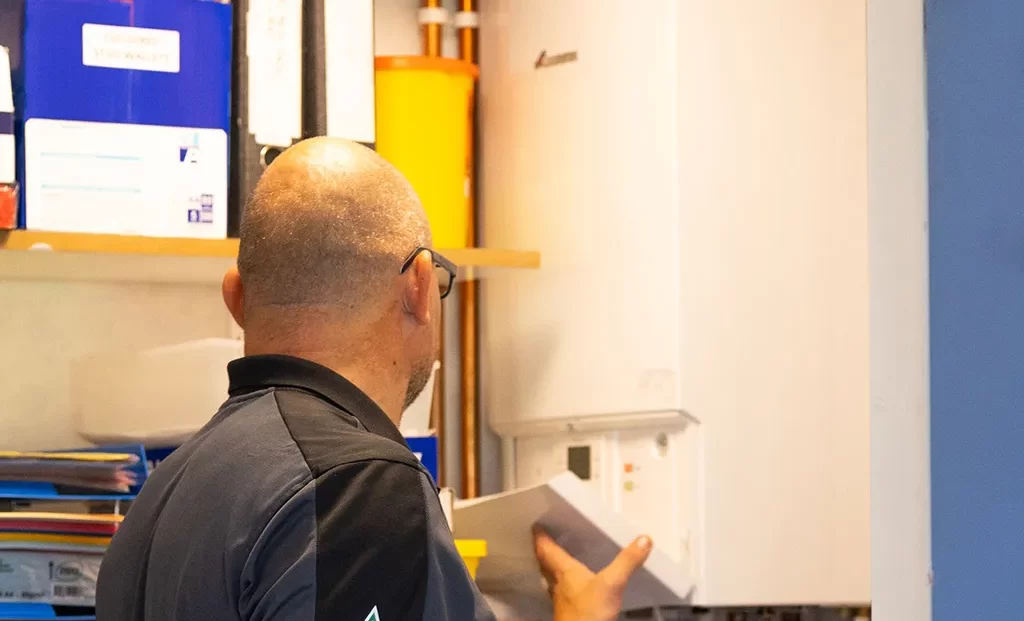
Our Gas Safe-registered engineers carry out commercial boiler installation, planned preventative maintenance, and fault diagnosis across gas, LPG, and oil-fired systems. For council clients, planned maintenance is structured around building use and service schedules, reducing the risk of system failures that would otherwise force a closure or disrupt public provision.
A single maintenance contract can cover the full range of buildings across the estate, with consistent documentation and a single point of contact for the facilities team. For registered contract clients, a 24/7 emergency callout is available with engineers on site within 2 to 4 hours when an urgent fault occurs.
Legionella Risk Assessment & Water Safety Compliance
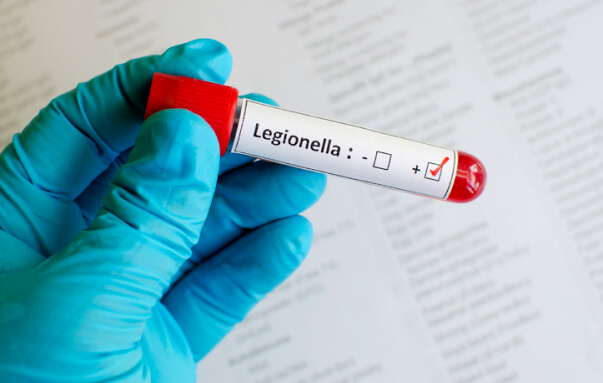
Under L8 (ACoP), the responsible person at a council building has a statutory duty to assess and manage the risk of Legionella bacteria in water systems. That duty applies to every building on the estate, and in a council portfolio, the risk points are numerous.
Leisure centre changing rooms, catering facilities in community halls, public showers, and infrequently used outlets in civic offices all present conditions where Legionella can develop if water temperatures drift and monitoring lapses. A single missed assessment or incomplete record creates a gap that the responsible person carries.
Our team carries out L8-compliant Legionella risk assessments across all council building types, covering water temperature monitoring, identification of risk points, and the preparation of written schemes of control. Ongoing monitoring programmes are available where the risk profile requires active management rather than a single annual visit. All assessments are fully documented, with records provided in a format that supports the responsible person’s audit trail and satisfies Health and Safety Executive (HSE) requirements.
Maintenance Contracts & Emergency Callout
A planned maintenance contract across a council estate reduces reactive spend and keeps compliance documentation up to date. Compared to managing heating faults on a reactive basis, a structured contract can reduce operational costs by up to 30%, removing the unpredictability of emergency repair bills arriving outside the budget cycle.
We structure contracts to work alongside council procurement requirements, with clear scope, defined response times, and transparent pricing. All works are carried out by Gas Safe-registered engineers, with full documentation provided after each visit.
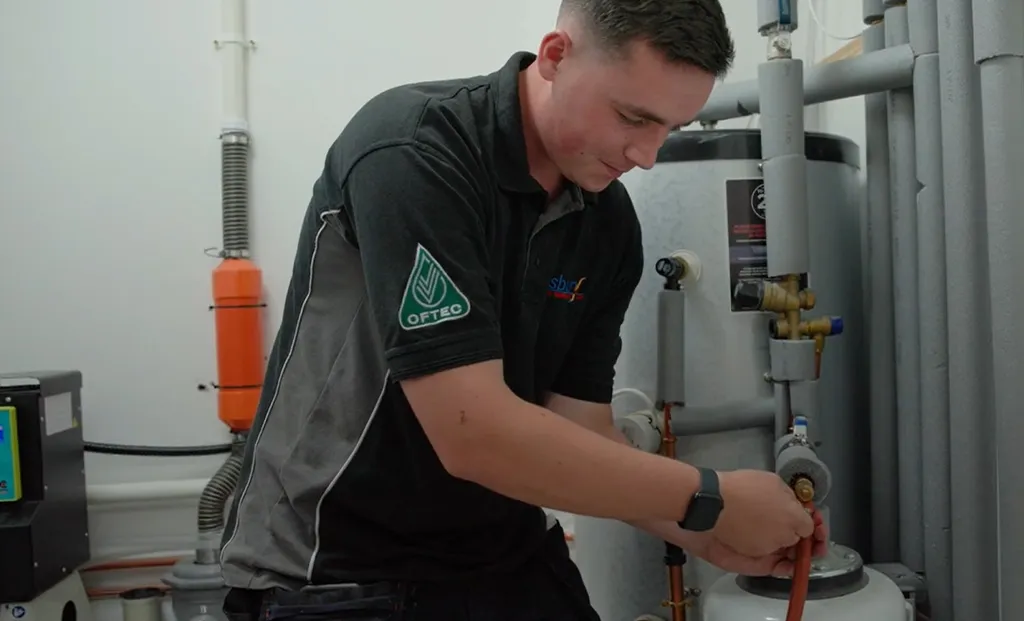
For urgent issues between planned visits, our 24/7 emergency callout service provides a guaranteed response within 2 to 4 hours for registered contract clients. Engineers are available at any hour through direct contact with the team, not a call centre.

Request a Maintenance Contract for Your Council Estate
Asbury has provided commercial heating and compliance services to council and public sector clients across Dorset, Hampshire, and Wiltshirefor over 60 years. Gas Safe registered engineers cover the full range of council building types, with contracts structured around your estate’s requirements and procurement process.
To discuss a tailored contract or request a site survey, call 01202 745189 or complete the enquiry form.
Frequently Asked Questions
Yes, under the Gas Safety (Installation and Use) Regulations 1998, all commercial gas appliances in council properties must be maintained in a safe condition and inspected by a Gas Safe-registered engineer. This applies to every building on the estate, from civic offices to leisure centres, regardless of occupancy pattern. The responsible person must retain records of all inspections and make them available on request. Our commercial maintenance contracts include full documentation after every visit.
Under L8 (ACoP), the duty rests with the responsible person, typically the facilities manager or the council officer with overall control of the premises. That duty cannot be delegated away, though the practical work of assessment and monitoring can be contracted out to a qualified provider. The responsible person must ensure a written scheme of control is in place and that records are kept in a format that satisfies a Health and Safety Executive (HSE) audit. Asbury carries out L8-compliant Legionella risk assessments across all council building types.
A written scheme of control sets out how Legionella risk is managed across a water system. It identifies the risk points, describes the control measures in place, and records how and when monitoring is carried out. Under L8 (ACoP), any building where a water system could create a risk of Legionella exposure must have one. For council buildings, this means the responsible person must hold a current scheme for every property on the estate. Asbury prepares written schemes as part of its Legionella risk assessment service.
The Workplace (Health, Safety and Welfare) Regulations 1992 require employers to maintain a reasonable temperature in workrooms. HSE guidance sets a recommended minimum of 16°C for sedentary work and 13°C for physical work. For council-managed public buildings, this applies to staff areas and, in practice, to any space occupied by the public for extended periods. A planned heating maintenance programme reduces the risk of a fault leaving a building below these thresholds.
At a minimum, any contractor working on gas systems in council buildings must hold commercial Gas Safe registration, not domestic. For oil-fired systems, OFTEC registration is required. SafeContractor accreditation, which independently verifies health, safety, and ethical practices, is increasingly a procurement requirement for public sector contracts.
Asbury holds all of these, confirmed on our accreditations page, and our engineers are qualified on larger, more complex commercial appliances rather than domestic systems.
Yes, a single contract can be structured to cover the full estate. This includes offices, libraries, leisure centres, community halls, and other council-managed properties, under one agreement, with consistent documentation and a single point of contact for the facilities team. This simplifies procurement, reduces administrative overhead, and ensures that compliance records across all sites are held in a consistent format. Asbury provides commercial maintenance contracts structured around the full range of council building types.
The risk profile varies wildly across a council estate. Leisure centre changing rooms and poolside showers pose a high risk due to high water volumes and continuous demand. Community halls that sit dormant for weeks create a risk of stagnation when outlets go unflushed. Civic offices with infrequently used facilities require regular temperature monitoring and outlet checks. In each case, a written scheme of control must address the specific conditions of that building. Our Legionella assessments cover all these building types under a single programme.
Council procurement typically requires a defined scope, transparent pricing, and written response time commitments before a contract can be awarded. A reputable contractor should provide all three, along with evidence of the relevant accreditations, including Gas Safe commercial registration, OFTEC for oil systems, and SafeContractor approval. Asbury structures contracts to work alongside council procurement processes, with clear documentation from the outset. For an initial discussion, contact the team on 01202 745189 or request a site survey.
For registered contract clients, Asbury provides 24/7 emergency callout with a guaranteed engineer on site within 2 to 4 hours. Contact is direct, and not routed through a call centre, which matters when a community hall, leisure centre, or public convenience needs an urgent response outside business hours. Buildings used by vulnerable members of the public carry an added obligation to restore heating quickly. The emergency callout service covers gas, LPG, and oil-fired systems across the full estate.
Reactive repairs cost more than planned servicing in almost every case:
- Emergency callout rates are higher than standard visit rates, often significantly so.
- Parts sourced urgently carry a premium over scheduled procurement.
- A fault that closes a public building incurs reputational and service continuity costs that are not reflected on the repair invoice.
- Deferred maintenance accelerates component wear, bringing forward capital replacement.
- A compliant, documented maintenance record reduces the risk of enforcement action and its associated costs.
A structured contract across the full estate, as Asbury provides through its commercial maintenance contracts, can reduce operational costs by up to 30% compared to managing faults reactively.