Prepare Your Care Home Heating for Winter with Confidence
A heating failure on a cold winter morning can disrupt an entire care home. Residents may become uncomfortable, staff must respond quickly, and daily routines can be affected. Seasonal heating care home checks help reduce this risk by identifying faults before colder weather places greater demand on boilers and heating systems.
These preventative inspections confirm that boilers, pipework, and heating controls are operating safely and efficiently. In environments where heating systems often run continuously during winter, early Boiler Servicing helps facilities teams maintain stable indoor temperatures and avoid avoidable system failures.
This guide explains why seasonal heating checks matter and how planned maintenance helps care homes remain safe and comfortable throughout the colder months.
Why Reliable Winter Heating Is Critical in Care Homes
Seasonal heating checks are important because cold weather increases health risks for people receiving care and places greater pressure on building systems. UK Health Security Agency (UKHSA) guidance for adult social care managers notes that winter conditions can worsen existing illness, increase the risk of chest infections, raise the risk of falls, and contribute to hypothermia. Adults aged 65 and over are among the groups most vulnerable to cold-related harm [1].
For care providers, maintaining consistent indoor temperatures is a core responsibility. The same guidance advises organisations to prepare cold weather plans before 1 November each year, ensure heating systems are maintained, and monitor indoor conditions during colder periods.
Care homes must also maintain safe premises and equipment. Understanding Care Home Heating & Compliance can help operators manage risk, support resident safety, and maintain dependable heating throughout winter. Improving heating performance can also reduce operational costs. Our article on How Energy Efficiency in Care Homes Comfortably Cuts Costs explains how system optimisation and regular servicing help maintain safe indoor temperatures while improving overall efficiency.
3 Winter Heating Risks Care Homes Should Avoid
Unexpected heating breakdowns during cold weather.
Uneven temperatures across resident rooms and communal areas.
Compliance concerns linked to poorly maintained equipment.
Winter Preparation Checklist for Care Home Heating Systems
Preparing heating systems ahead of winter helps care homes maintain safe indoor temperatures for residents and staff. The Health and Safety Executive (HSE) advises that indoor workplaces should normally be kept at least 16°C, or 13°C where work is physically demanding, making heating reliability an important part of building safety during colder months [2].
Planning these checks early helps reduce the likelihood of winter failures. Our guide to 7 Steps to Prepare Heating Systems for Winter outlines practical actions facilities teams can take to prepare boilers and heating systems ahead of colder weather.
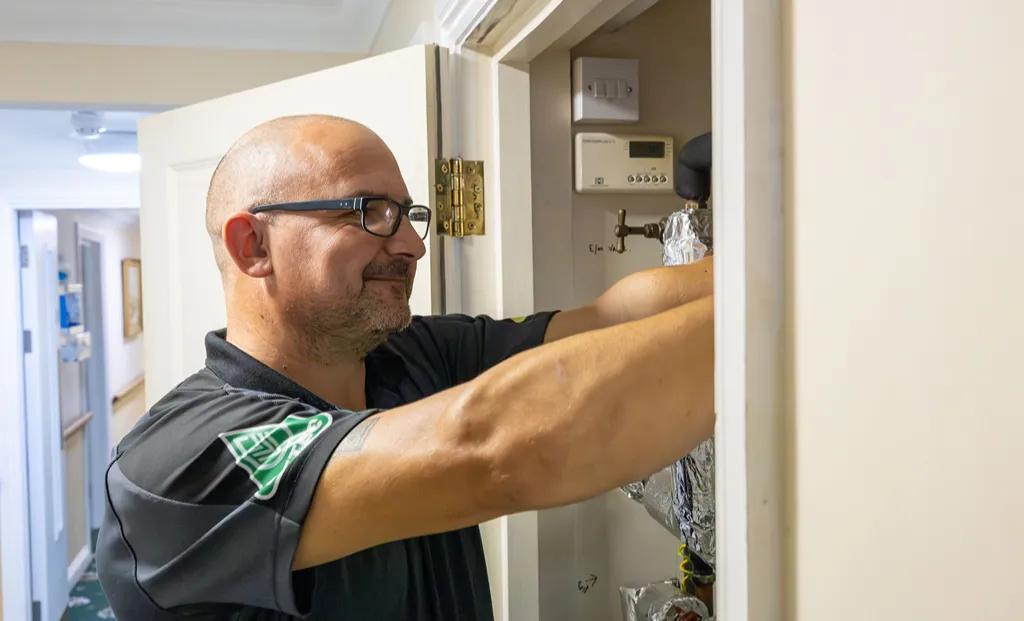
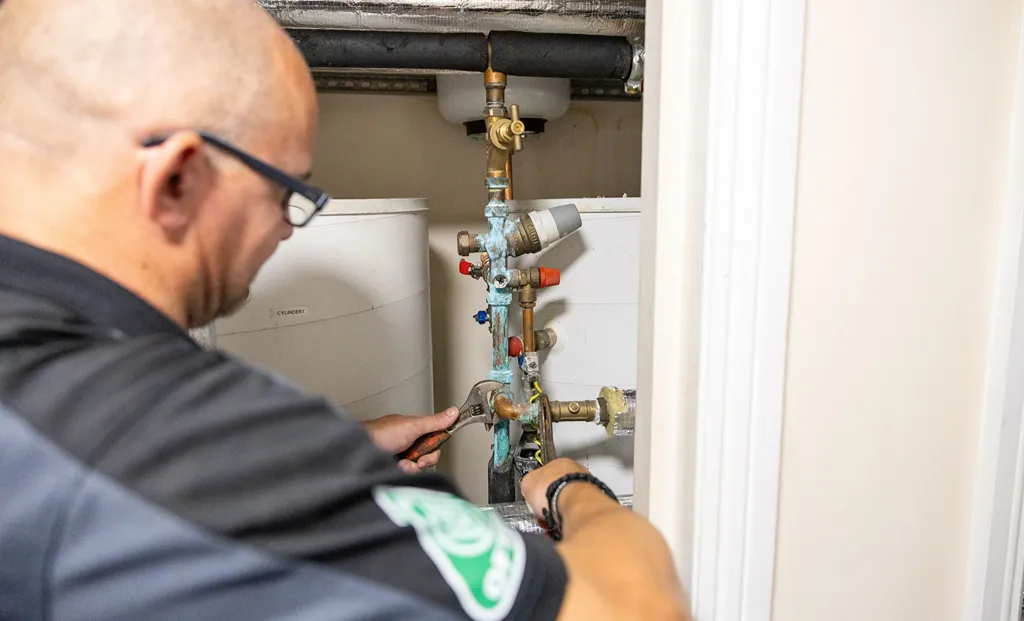
Before temperatures drop, boilers, heating controls, pipework, and hot water systems should be inspected together. Professional commercial boiler servicing visits can confirm safe operation and identify worn components that may fail during periods of peak demand.
Hot water systems should also be monitored carefully. Regular Legionella Risk Assessment & Testing help maintain safe water conditions for residents.
Key winter heating checks:
Inspect boilers and confirm efficient operation.
Test thermostats and heating controls.
Check insulation on exposed pipework.
Review system pressure and circulation performance.
Confirm safe operation of hot water systems.
Keep Care Home Heating Systems Reliable Year-Round
Preventive maintenance plays an important role in maintaining the long-term performance of heating systems within care environments. Many care homes rely on boilers and heating infrastructure that have been operating for years, making regular inspection essential to identify ageing components, declining efficiency, and equipment approaching the end of its service life.
Under Regulation 15 of the Health and Social Care Act 2008, providers must ensure that premises and equipment used to deliver care are clean, suitable for their intended purpose, and properly maintained. This requirement includes heating systems such as boilers, pumps, and controls that must remain safe and operational for residents and staff [3].
To support this responsibility, many care providers arrange structured servicing through Boiler Maintenance Contracts, which allows engineers to monitor system performance and address issues before they affect heating reliability.
Some care providers choose to formalise this approach through structured maintenance programmes. Asbury CareGuard supports care homes with coordinated boiler servicing, water safety management, and compliance oversight. Our package helps operators maintain reliable heating systems while preparing plant and infrastructure for periods of increased winter demand.
To recap, these maintenance practices support long-term reliability:
Schedule servicing based on equipment age and system usage.
Monitor heating performance and energy consumption.
Maintain clear maintenance records for compliance and planning.
Heating Audits Help Care Homes Prepare for Winter
Heating audits provide a structured assessment of how well building systems will perform during the winter heating season. Engineers review the condition of boilers, system efficiency, and heating distribution throughout the property to identify potential improvements.
Care environments often rely on complex heating infrastructure serving bedrooms, communal areas, kitchens, and clinical spaces. Working with experienced care home heating specialists helps ensure these systems are assessed correctly and that heating strategies reflect the operational needs of care environments.
Technology can also support system monitoring and efficiency. Our guide to BMS Systems for Care Homes explains how building management systems help facilities teams monitor heating performance and identify faults early.
Audits can also support longer-term planning. By identifying ageing equipment, inefficient controls, or system imbalances, facilities teams can prioritise upgrades and improve heating efficiency before winter demand increases.
Prepare Your Care Home Heating System for Winter
Care homes that prepare heating systems before winter are better positioned to maintain stable indoor temperatures when demand increases. Early inspections allow facilities teams to address faults before boilers and heating controls come under greater pressure during colder months.
Asbury Heating supports care providers with practical, preventative heating services tailored to care environments. You can also explore our Case Studies to see how early planning and proactive servicing have supported care providers across the region. Our Colten Care case study shows how ongoing maintenance and system monitoring can help maintain reliable heating across care environments.
Call 01202 745189 or arrange a consultation to review your heating systems and discuss seasonal readiness with an experienced commercial heating specialist.
Care home heating partner choice comes down to compliance knowledge, emergency response, records, and planned maintenance that keeps care homes running.
Hot water compliance in care homes is a regulatory requirement. A care home cannot operate safely or compliantly without a working hot water supply today.
Reducing heating breakdowns in care homes needs planned servicing, documented inspections, and lifecycle planning to cut failures and support compliance.
Good energy efficiency in care homes comes from reliable system design, planned maintenance, and effective control. Reduce waste and keep comfort steady.