What Causes Low Water Pressure in Commercial Buildings?
Low water pressure in commercial buildings usually traces back to one of four causes: narrowed pipes, regulators set too low, a struggling pump, or demand that has simply outgrown the system. Each can be checked in a sensible order, and most turn out to be easier to put right once you know where to look.
By the end, you’ll know how to work through these causes one at a time, narrowing down the problem, so you can make the right call. And it all starts with the question facilities teams ask first, and that’s ‘how can you tell whether the pressure is genuinely low, or whether you are looking at a one-off fault that will clear by itself?’.
How Do You Know If a Building Has a Water Pressure Problem?
The first sign is a complaint rather than a gauge reading, so it helps to know which complaints point to a genuine problem. Low water pressure in commercial buildings tends to show itself in a few familiar ways:
Taps and showers running weakly
Cisterns taking noticeably longer to refill
Pressure falling away at busy times of day
Upper floors affected before lower ones
One of these alone may be a local fault, such as a blocked aerator. A pattern is different, especially when several outlets are affected at once or the problem returns at the same time each day. That is when, regarding commercial plumbing low water pressure, reasons stop being about one fitting and start to involve the wider system. Once you can tell that it is a pattern, the sensible place to begin is with the pipes and fittings that carry water through the building.
How Do Pipework and Valves Cause Low Water Pressure?
Pipework is often where the story begins, because water pressure is lost gradually as it travels. In older buildings, scale and corrosion build up inside the pipes and narrow the space the water has to pass through, so the same supply delivers less at the outlet. Hidden leaks have a similar effect as they divert water before it reaches the taps.
Then you need to consider valves as these deserve equal attention. An isolation valve left partly closed after maintenance is one of the most common causes of low water pressure in office buildings, and a pressure-reducing valve set too low, or one that has begun to fail, can hold back the whole supply to a floor.
It doesn’t take long to check either and the good news is that you will rarely require specialist tools. If the pipes and fittings are in good order, attention turns to the equipment designed to lift the pressure in the first place.
Why Do Commercial Water Booster Pumps Fail to Keep Up?
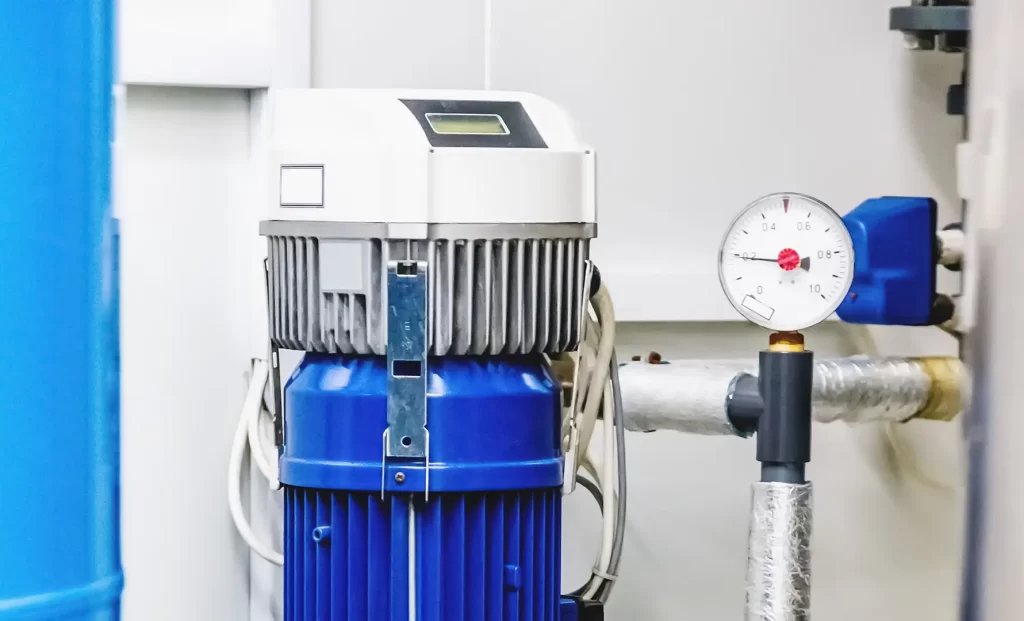
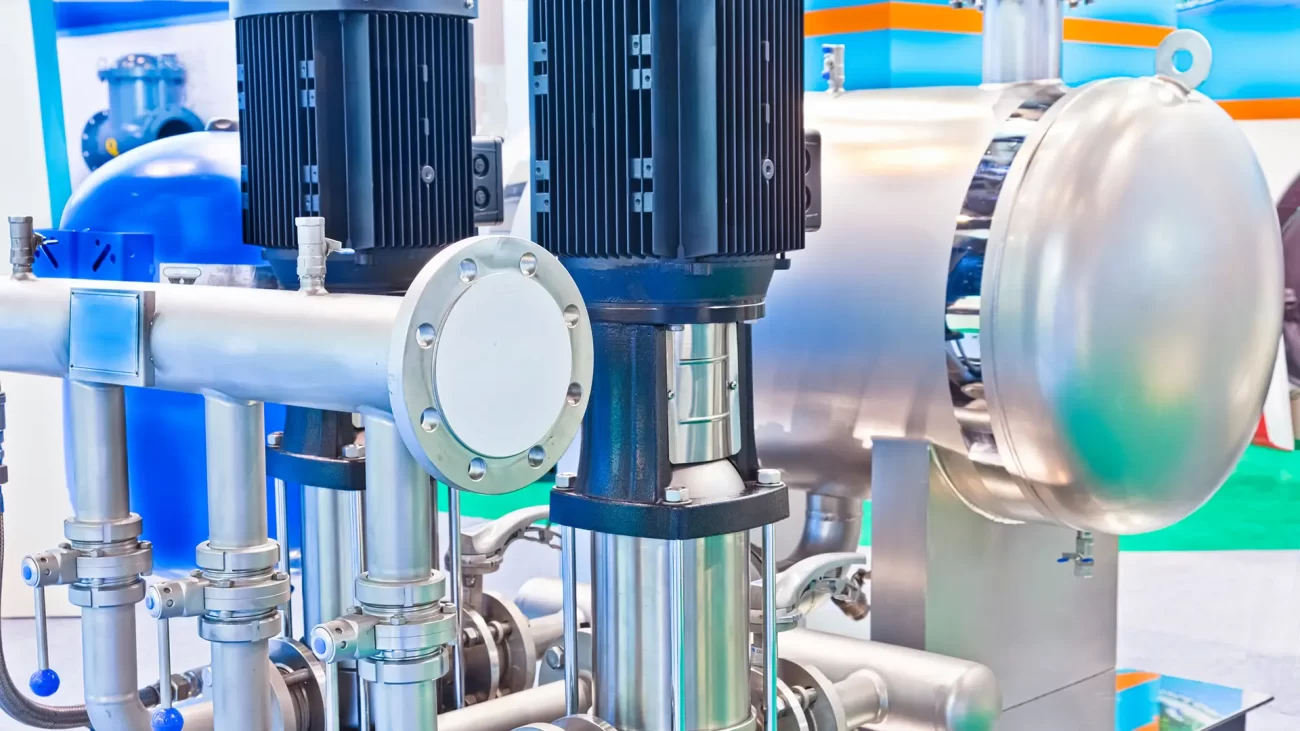
A booster pump does one simple job, and that’s take the pressure arriving from the mains and raising it so water reaches the top of the building at a usable force. Commercial water booster pump troubleshooting often begins with wear, since impellers lose efficiency over time and a pump that once coped easily starts to fall short. Control faults matter too, because a tripped or mis-set pressure switch can leave booster pumps idle when they should be running.
Yet another culprit to consider is the pressure vessel; this fails and it makes the pump cycle on and off too often. In some cases, the pump might be perfectly healthy but not sized correctly. This can explain how low water pressure in commercial buildings appears after a refurbishment or an increase in occupancy.
With so many possible causes, guessing rarely works, which is why the next step is a methodical way of telling them apart.
How Do You Diagnose Commercial Plumbing Low Water Pressure?
Working through commercial building water pressure problems in a fixed order saves time and avoids replacing parts that were never at fault. In fact, many apparent plumbing issues are settled by the first two steps alone:
Locate the Drop: Take pressure readings at the incoming supply and at the affected outlets, because the gap between them shows where pressure is being lost.
Check the Supply: Confirm the mains is delivering what the building needs, since a weak incoming supply cannot be fixed inside the property.
Inspect the Settings: Make sure each isolation valve is fully open, and each pressure-reducing valve is set correctly.
Test the Pump and Storage: Check that the pump starts, runs smoothly and holds its set pressure, then inspect the pressure vessel.
Write each reading down as you go, because a clear record makes it easier to choose the right fix, or to brief a specialist.
How Can You Increase Water Pressure in a Commercial Property?
When researching how to increase water pressure in a commercial property, the answer depends entirely on which cause the readings point to. Descaling or replacing narrowed pipes restores flow, resetting or replacing a faulty valve corrects the pressure at the source, and servicing or upgrading a pump brings the supply back in line with demand.
Getting the cause right also matters for the long term, because low water pressure in commercial buildings often returns when a repair treats the symptom and leaves the system’s ageing parts untouched. This is where planned maintenance earns its place.
At Asbury Heating, our HVAC services include cold water booster pump work, and our CareGuard contracts cover water safety and plant room lifecycle planning, so ageing pumps are replaced on a plan rather than after a failure. If your readings already point to a cause, we can help you decide what to do about it.
Talk Through Your Pressure Readings with Our Engineers
Most pressure problems trace back to narrowed pipes, valve settings, pump faults or demand that has grown, and checking them in that order will find the cause. If you would like a second opinion on your readings, call us on 01202 745189 or send them through our contact form, and one of our engineers will talk you through what they suggest.
Either way, you will know where the problem lies and what it will take to put right.
Buildings need a commercial cold water booster pump when mains pressure cannot cope with height, occupancy or peak demand across multiple floors or zones.