


Council Air Conditioning Services
F-Gas-certified cooling and ventilation for local authority buildings across the South of England
Get in touch
Get in touch with us today, and we’ll help to find the right solution for you. We aim to respond to all contact submissions within 48 hours.

Comfort & Compliance in Every Council Building
Ask a council facilities manager what a comfortable building feels like and the answer changes by site. A leisure centre studio needs a fast temperature swing between back-to-back classes. A civic office needs quiet, consistent cooling that nobody in a meeting notices. A library needs humidity and temperature held steady enough to protect the stock, not just the visitors. Yet, none of that works with a single specification applied across the whole estate.
The air itself matters as much as the temperature. Studies show cognitive performance can fall by around 30% in poorly ventilated indoor spaces, according to the British Safety Council. Therefore, in buildings where staff and the public spend their day, that is a service standard question as much as a comfort one. Asbury Heating has worked with local authorities and public sector clients across the South of England since 1962, and air conditioning is specified with the same estate-wide thinking as the heating contracts we have run for over sixty years.

Five Star Reviews
We’re rated five star by our customers on Google. Check out the testimonials from some of our incredible customers by clicking the button below.
The Accreditations Your Estate Actually Needs
Every engineer on our team holds F-Gas certification, the qualification required by law to install, maintain, and repair systems containing fluorinated refrigerants. It is not a badge on a van; it is a requirement for anyone touching your plant.
For a council estate, verifying credentials is not a formality either. Procurement teams increasingly ask for evidence before a contractor is shortlisted, not after a contract is signed, and a gap in accreditation can rule a supplier out before price is even discussed.
Here is what we bring to a council contract:
- We hold F-Gas certification for the safe handling of refrigerants across every system type we install.
- We are SafeContractor accredited, which independently verifies our health, safety, and ethical standards.
- We give manufacturer-neutral advice, based on your building rather than a supplier tie.
- Registered contract clients receive 24/7 emergency callout, with an engineer on site within 2 to 4 hours.
- A single point of contact covers your entire estate, with consistent documentation after every visit.
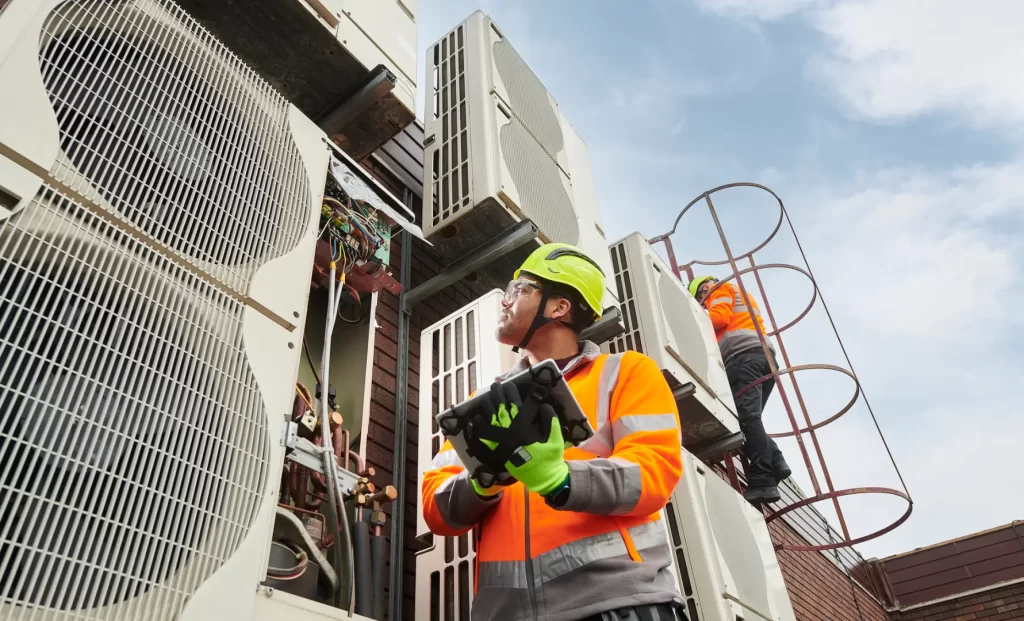
One Engineering Team, Every Building Type
A Different Brief for Every Site
Civic offices, libraries, leisure centres, community halls, schools, and military establishments rarely share a cooling need, even when they sit on the same estate and report to the same facilities team. A leisure centre studio and a library reading room have almost nothing in common beyond the postcode. We build installation and servicing schedules around how each building actually operates, so a busy leisure centre and a quiet council office both get attention on their own terms, from the same contract and the same point of contact.
From Site Survey to Signed-Off Contract
Here is how a council air conditioning contract moves from first enquiry to a fully serviced system.

We survey every building before quoting, so the system fits your space and how it is actually used rather than a generic estimate that undersizes the plant room and oversizes the invoice later.

We are not tied to any manufacturer, so whether a site needs VRF, VRV, split, or ducted, the recommendation is based on what the room needs, not what is easiest for us to sell.
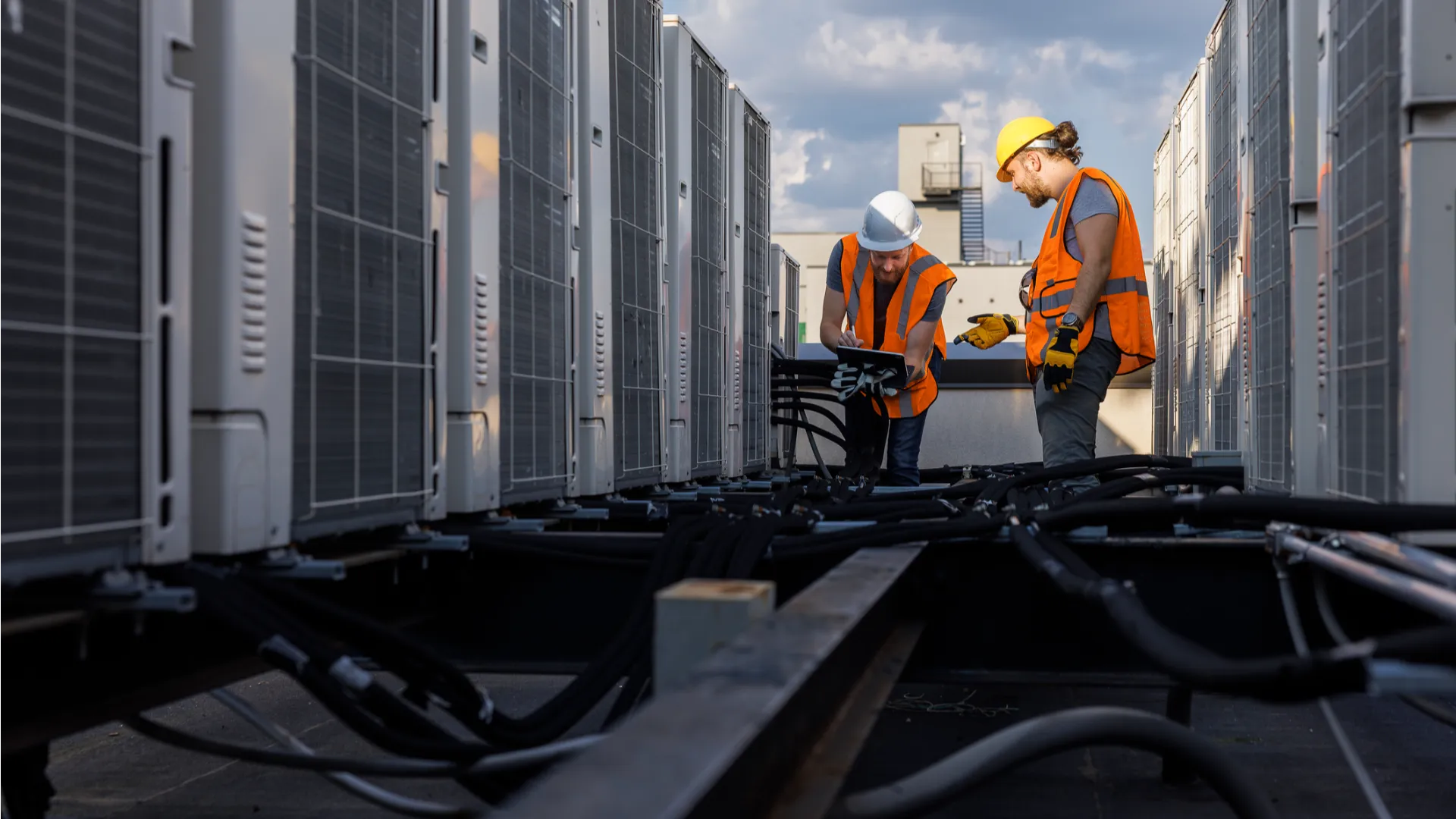
Work is scheduled around your building’s opening hours and busiest periods, so a leisure centre studio or civic office stays open while the system goes in.
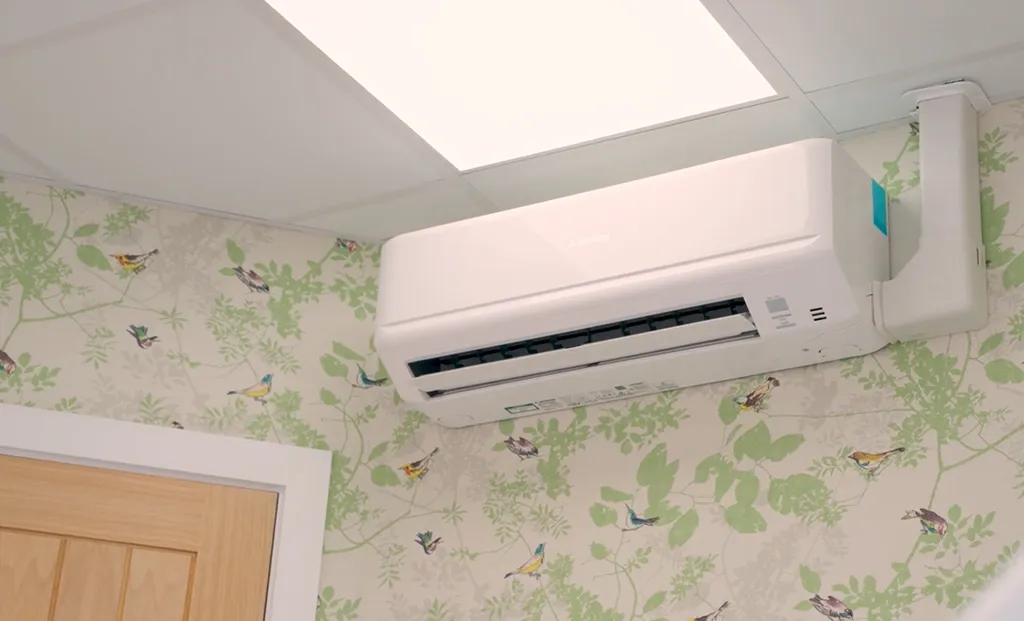
Every installation is commissioned and handed over with full F-Gas and building control documentation, so the paperwork is in place before your first compliance check, not after it.

Every visit is F-Gas compliant, documented in writing, and registered contract clients receive an engineer on site within 2 to 4 hours if something fails outside a scheduled visit.
Matching the System to the Building
Energy used in non-domestic buildings accounts for 23% of the UK’s built environment carbon emissions, according to the UK Green Building Council. For a council estate answerable to a net zero target as much as a maintenance budget, the air conditioning specification is one of the more direct places to make a difference.
No two buildings on your estate share a cooling profile, and the right system depends on building type, occupancy pattern, and how much disruption installation can cause. The breakdown below covers what we install most often across council estates, and why.
Independent Control for Every Room, One Outdoor Unit
VRF and VRV systems suit civic offices and leisure centres where different zones need different temperatures at the same time, without installing a separate outdoor unit for each one.
Comfort Sized to the Building, Not Oversold
Split and multi split systems suit community halls and single offices, delivering effective cooling without the cost or complexity of a system built for a much larger estate.
Comfort That Does Not Compromise the Building’s Character
Ducted systems keep the visible footprint to a minimum, which matters where a council building carries listed status or sits within a conservation area.
Lower Running Costs Built into the Spec
We install systems with high Coefficient of Performance ratings as standard, so more of every unit of energy goes into heating or cooling and less is lost, cutting running costs before the system is even switched on.
Compliance Handled, Not Handed Back to You
F-Gas regulations and building control requirements are managed as part of the installation, including any planning permission the system needs, so compliance does not become another job for your facilities team.
Contract Pricing & What Shapes It
Pricing depends on the number of buildings covered, the mix of system types across the estate, and how often each one needs servicing. Reactive repairs cost more than planned servicing in almost every case, and a system failure in August disrupts a public building far more than a visit booked in April.
We build contracts around council procurement standards, with a defined scope, agreed response times, and pricing that does not move once the contract is signed.
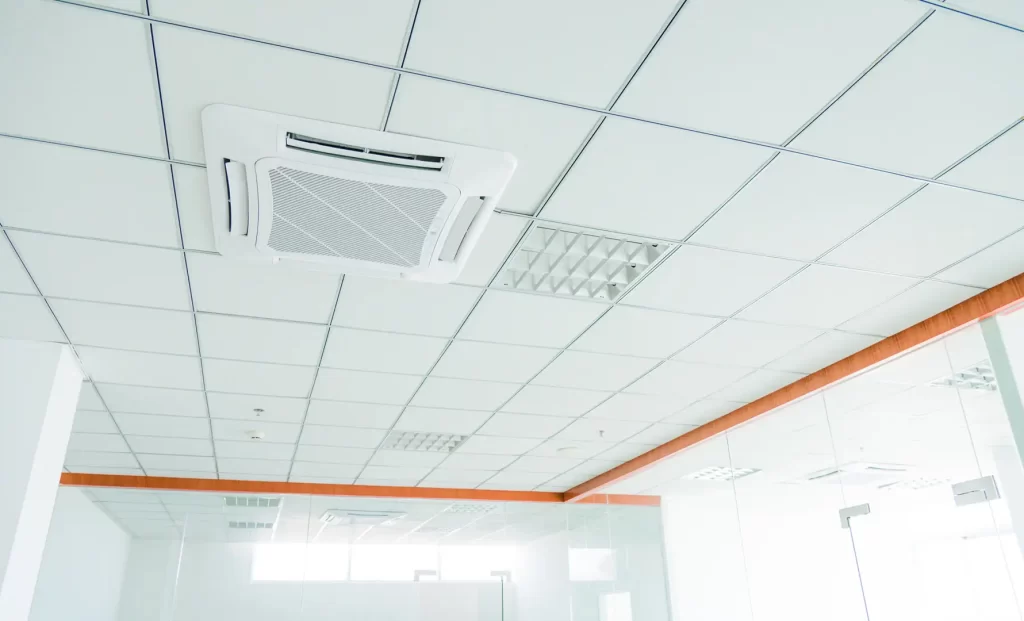

Areas We Cover
We provide council air conditioning services across the South of England, with engineers based locally rather than dispatched from a distant regional hub. Working locally keeps travel time short and response times fast, which matters when a contract specifies a 2 to 4-hour attendance window.
Our engineers cover:
- Dorset, including Bournemouth, Poole, and Dorchester.
- Hampshire, including Southampton, Winchester, and Basingstoke.
- Wiltshire, including Salisbury, Swindon, and Chippenham.
We also cover East and West Sussex, Surrey, and parts of Devon, so a multi-site council estate can be served under a single contract regardless of which county each building is in.
Plan for Summer Before It Arrives
Reactive air conditioning management usually surfaces at the worst moment. A summer failure that becomes a public-facing problem and a repair log that grows faster than the maintenance budget allows. A structured contract replaces that with scheduled servicing, F-Gas compliant documentation, and guaranteed emergency cover if something does go wrong between visits.
Asbury Heating has provided commercial heating and air conditioning services to local authorities and public sector clients across the South of England since 1962. Our F-Gas-certified engineers work across council estates of every size, with contracts built to meet public-sector procurement requirements from the outset.
To discuss an air conditioning contract for your council estate, call 01202 745189 or request a site survey.
Frequently Asked Questions
Cost depends on system type, the number of zones, and the complexity of the installation, so there is no single figure that applies across a council estate. A single split system for a small office costs considerably less than a VRF system serving a leisure centre with multiple zones. The only reliable way to price a council contract is a site survey followed by a written quote, rather than a per-unit estimate.
Most air conditioning installations on commercial and council buildings fall under permitted development rights for planning purposes, though building control approval is a separate check that still often applies.
Planning permission is more likely to be required where:
- The building holds listed status or protected heritage features.
- The site sits within a designated conservation area.
- External condenser units would be visible from a public highway.
Building control approval, by contrast, checks that the installation meets construction and safety standards regardless of planning status, and larger systems are more likely to need it. Our engineers manage both processes as part of every installation.
Yes, systems containing fluorinated refrigerants are subject to F-Gas regulations, which require regular leak checks and maintenance to be carried out by an F-Gas-certified engineer. Larger commercial and public sector systems may also fall under TM44 inspection requirements. Skipping servicing not only risks a breakdown; it can also leave a council estate non-compliant during an audit or safety inspection.
No, air conditioning itself is not a legal requirement. The Workplace (Health, Safety and Welfare) Regulations 1992 require employers to maintain a reasonable working temperature and provide adequate ventilation, without specifying the method used to achieve it. Persistent complaints about heat or poor air quality can still create a compliance issue even without a specific temperature being breached. Air conditioning is often the practical way councils meet that legal obligation across a varied estate.
Yes, a single contract can cover every building on a council estate, regardless of system type or fuel source, with a single point of contact and a single set of documentation, rather than a separate supplier per site. This is how Asbury has worked with local authorities since 1962, and it is the approach most councils prefer for procurement simplicity as much as convenience.
Registered contract clients can call our team directly at any hour, rather than going through a call centre. We guarantee an engineer on site within 2 to 4 hours of that call, so a fault reported at 5am does not sit unattended until a normal working day begins. This emergency response sits alongside the scheduled servicing in every contract, not as a separate add-on.
Most commercial air conditioning systems last between 10 and 15 years with regular servicing, though this varies by system type, usage intensity, and maintenance history. Age is not the only signal worth tracking. A system that has needed the same fault fixed more than once, or whose energy bills have crept up despite regular servicing, is usually closer to replacement than repair. Recognising these signs early makes it easier to plan a replacement on your own timetable rather than the system’s.
A maintenance contract sets out what gets checked, how often, and what happens if something goes wrong between visits, rather than leaving servicing to chance.
Most Asbury contracts for council clients include:
- Scheduled inspections carried out by F-Gas certified engineers.
- Written service records for every visit, ready for audit.
- 24/7 emergency callout with a guaranteed attendance window.
The exact scope is agreed during the initial contract discussion, based on the number of buildings and systems involved.
A Coefficient of Performance, or COP, measures how much heating or cooling a system produces for each unit of electricity it uses. A COP of 4 means the system delivers 4 units of heating or cooling output for every 1 unit of energy input. The higher the COP, the lower the running cost for the same result. It is one of the figures worth checking on any air conditioning specification, since two systems with the same cooling capacity can carry very different energy bills.
Where a building’s setup supports it, yes. A building management system can track performance and flag issues before they become a breakdown, rather than waiting for a fault to be reported.
Remote monitoring typically covers:
- Live temperature and system performance data across every zone.
- Automatic alerts when a system runs outside its normal range.
- Usage reporting that supports energy and budget planning.
This is usually set up alongside a wider building management system, rather than air conditioning in isolation.