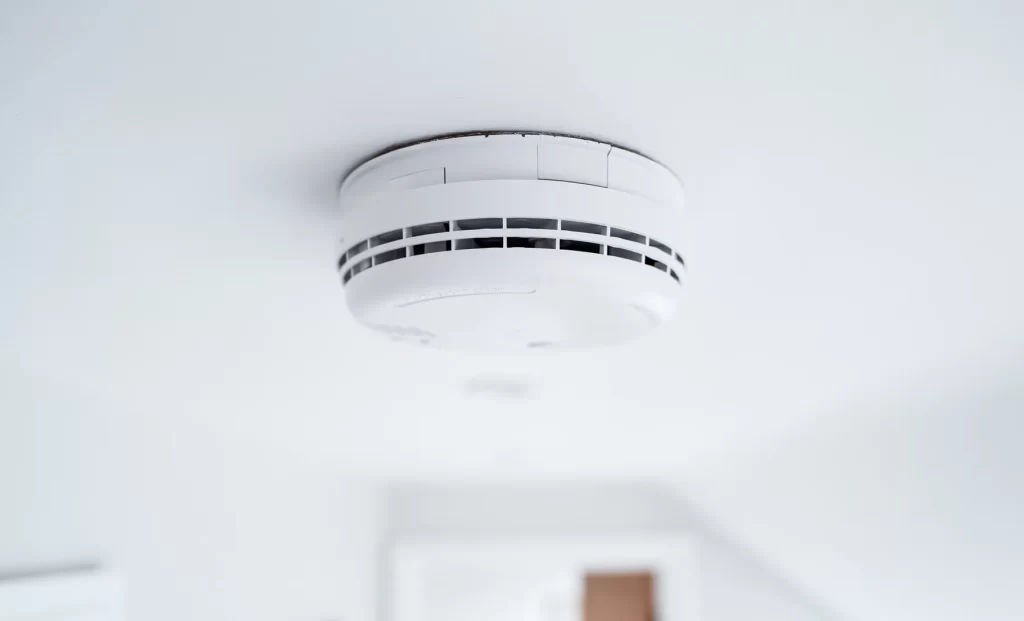
What Are the Legal Requirements for Carbon Monoxide Detectors in UK Workplaces?
While there is no single law that says every UK workplace must fit a carbon monoxide detector, that does not mean they should skip the step entirely. In fact, employers and landlords have wider health and safety duties, and in many workplaces, those duties make detectors the sensible and widely expected step, rather than an optional extra.
There are rules, and these sit across several different laws, so they are easy to misread, even for experienced managers, and facilities managers often ask us where the line actually falls. This guide explains the workplace carbon monoxide detector requirements as they currently stand for employers and landlords, starting with what the law does and does not say.
Is There a Law That Specifically Requires Carbon Monoxide Detectors at Work?
Not in the way most people expect. Rented homes in England have specific rules requiring alarms in certain rooms, but commercial premises have no standalone rule requiring a detector. Instead, the law places duties on the people who run and own buildings.
The Health and Safety at Work etc. Act 1974 says employers must protect staff and visitors, so far as is reasonably practicable [1]. While, The Gas Safety (Installation and Use) Regulations 1998 add to this, requiring gas work to be installed by a Gas Safe registered engineer. Plus, gas appliances, flues and pipework must be kept safe [2].
The Health and Safety Executive (HSE) enforces both, and it expects carbon monoxide to be managed like any other hazard. This is why workplace carbon monoxide detector requirements are best seen as a duty to control the danger, with detectors as one measure among several. That brings us to what the HSE expects in practice.
What Does the HSE Expect from Employers and Landlords?
The HSE starts from a simple idea: carbon monoxide should be stopped at source. It is a colourless, odourless gas, made when fuel burns without enough air, so, the focus is on well-kept equipment, good ventilation and clear flues, all checked by competent people.
Employers hold this duty for their staff, while landlords hold it for the parts of a building they control. In a multi-tenant property, the lease and the maintenance arrangements matter as much as the equipment. Alarms help, but the HSE treats carbon monoxide alarms as a back-up, not a replacement for servicing, as they only warn you once the gas is present, which is a point many people miss. Good workplace safety therefore starts with the equipment and ends with the alarm, and to judge that balance, you need to look closely at your own building.
How Does a Risk Assessment Show Whether You Need Detectors?
A written assessment turns general duties into specific decisions, and it is the clearest way to work out your own workplace carbon monoxide detector requirements. The Management of Health and Safety at Work Regulations 1999 require one [3], and the HSE expects the assessment to fit the size of the building. This is because a small office with electric heating looks very different from a plant room serving several floors.
As such, the person carrying it out should look at:
The type, age and condition of fuel-burning equipment.
How flues are routed, and when they were last checked.
Ventilation in each space.
How rooms are used, including any where people sleep.
Who might be exposed, such as staff, visitors or contractors.
The servicing history of each appliance.
If the findings show gas could build up where people are present, detectors are a sensible control, leaving the question of where they should go.
Where Are Carbon Monoxide Alarms Required or Recommended in Commercial Buildings?
Once the assessment points towards detection, location matters as much as the device. The areas below come up most often, but your own findings should always lead:
Plant Rooms: Boilers and other gas appliances sit here, so a detector gives early warning of a flue or combustion fault. Keep it clear of vents and draughts.
Kitchens: Catering equipment burns a lot of fuel, so detection is often advised alongside good extraction and regular servicing.
Shared Areas: If one plant room serves several tenants, alarms in nearby rooms protect people who may not know the equipment is there.
Sleeping Accommodation: Caretaker flats, hotels and care settings need alarms close to where people sleep, because that is where a warning matters most.
How Do Detector Installation and Gas Safety Maintenance Fit Together?
Fitting a detector and servicing the equipment are two halves of one job. Your workplace carbon monoxide detector requirements are only properly met when both are in place. At Asbury Heating, our engineers install detectors and carry out gas tightness testing (checking pipework for leaks) and purging. They also service boilers under maintenance contracts, meaning that faults are caught at source, not by the alarm.
We are Gas Safe registered, which the law requires for gas work. We are also OFTEC registered, F-Gas registered and SafeContractor accredited. Our CareGuard maintenance and compliance contracts keep servicing, testing and lifecycle planning on one schedule. Your risk assessment should then record what is fitted, when it was tested and when it is next due. That record shows you take workplace safety seriously, and it is simple to share with an inspector. If you would like a second opinion, the next step is simple.
Talk Through Your Building's Carbon Monoxide Provision with Asbury
Getting the right provision for your building is easier with someone who has seen it all before. To review your workplace carbon monoxide detector requirements, call us on 01202 745189 or use our contact form, and we will explain plainly what is needed.
There is no single rule for every workplace, but a sound assessment, serviced equipment and well-placed detectors will put you in a firm position.