


Leisure Centre Legionella Testing Services for UK Sports and Fitness Facilities
Specialist legionella risk assessment, testing, and compliance support for UK leisure centres, pools, and sports facilities
Get in touch
Get in touch with us today, and we’ll help to find the right solution for you. We aim to respond to all contact submissions within 48 hours.
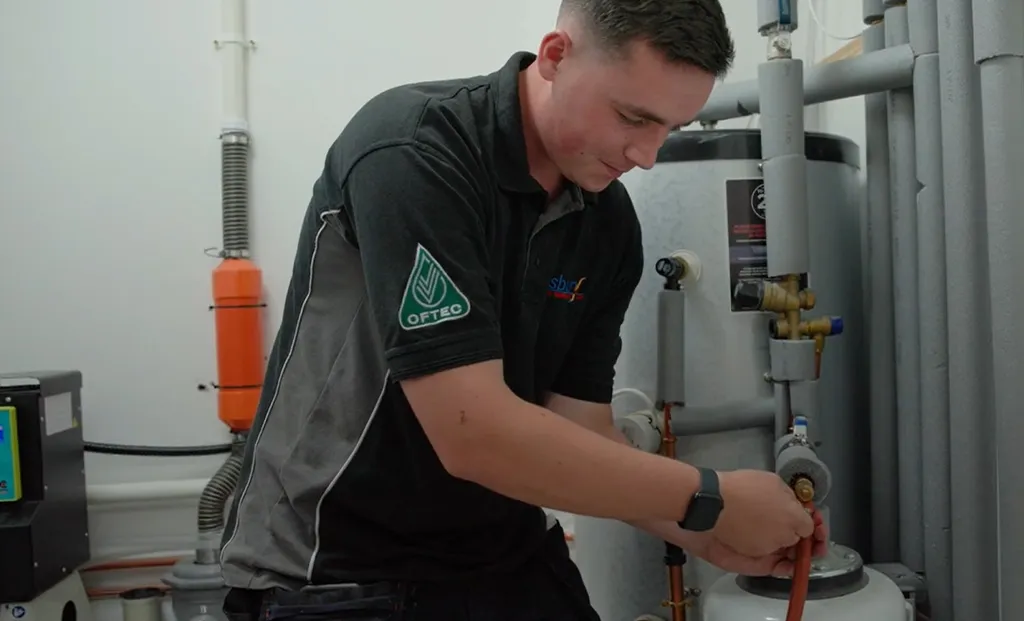
Expert Legionella Testing to Keep Your Facility Compliant
Leisure centres sit alongside hotels and hospitals among the highest-risk environments for Legionella in the commercial built environment, and the reason is obvious. Multiple shower facilities, stored hot water in calorifiers, fluctuating occupancy, and extensive pool plant pipework all create conditions where the bacteria can establish itself if systems are not properly managed.
A single risk assessment carried out once, then filed away, is not enough to meet that risk. L8 compliance demands active, ongoing management, not a one-off exercise. That is why a leisure centre Legionella risk assessment needs to come from a contractor who understands the specific pressures of a leisure environment, and Asbury Heating manages that process for leisure operators across the South of England.

Five Star Reviews
We’re rated five star by our customers on Google. Check out the testimonials from some of our incredible customers by clicking the button below.
Why Leisure Centres Are High-Risk Legionella Environments
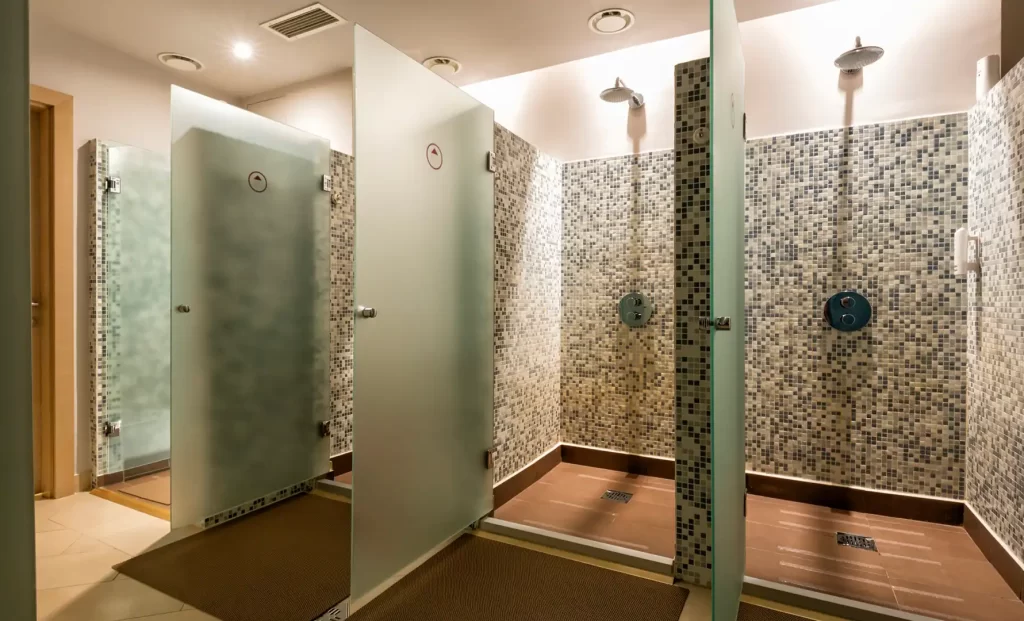
Every leisure centre has several risk points working against it at once, and it helps to understand why each one matters. Changing room shower facilities are often the most obvious. Multiple outlets used intensively during peak periods, then left dormant overnight, create exactly the conditions Legionella needs: warm water, stagnation, and aerosol generation every time a shower head is switched on.
Calorifiers present a similar challenge from a different angle. These stored hot water vessels must be kept above 60°C at the primary heat exchanger and 55°C at the outlet, and any drop below that range gives bacteria the opportunity to multiply undetected.
Poolside showers, lane showers, and staff-only outlets are frequently the ones that fall through the gaps. Used rarely, they sit stagnant for days at a time, which is precisely when the risk increases. Pool plant pipework and associated systems also fall under L8, even though pool water chemistry itself is governed separately by PWTAG guidance.
Cooling systems, where present, add a further point that needs monitoring. Taken together, these risk points are why sports facility water safety cannot be treated as a single task. It is a continuous responsibility, and one that any credible programme of Legionella testing for swimming pools plant needs to reflect.
What a Legionella Risk Assessment Covers
A proper leisure centre Legionella risk assessment starts with understanding the system as it operates, not as it appears on paper. Our process begins with a site survey and a review of the system schematic, mapping every water source, storage vessel, and outlet across the building. From there, every risk point identified during the survey is assessed individually, with temperature checks and sampling carried out where required to confirm whether the system is operating within safe parameters.
The output is twofold:
- A risk assessment report setting out findings and any remedial works needed to bring the system into compliance
- Followed by a Written Scheme of Control, the document L8 (ACoP) requires every responsible person to hold
This is not paperwork for its own sake. The Written Scheme sets out a systematic approach to the control of risk across the whole site, and it needs to be reviewed and updated as the building or its use changes, not filed once and forgotten.
Our assessment process is built to reflect that requirement in full:

A full walk of the building to map every water outlet, storage vessel, and pipe run, cross-referenced against existing system drawings where available.

Every calorifier, shower, infrequently used outlet, and section of pool plant pipework assessed individually for temperature, stagnation, and aerosol risk.

Readings taken across the system, with water sampling carried out where results indicate further investigation is needed.

A clear written record of findings, current compliance status, and any remedial works required.

The living document that sets out how risk will be controlled and monitored going forward, produced or updated in line with L8 requirements.
Ongoing Monitoring & Compliance Documentation
A risk assessment is the starting point, not the end point. L8 compliance for leisure centres depends on what happens between formal assessments, and that is where many operators fall behind. Monthly temperature checks at sentinel outlets, routine flushing of poolside and infrequently used showers, and regular verification of calorifier temperatures all need to happen consistently, with records kept as part of the Written Scheme.
Rather than leaving this to be managed piecemeal, Asbury Heating builds it into a planned maintenance contract, so the responsible person has one contractor managing the full compliance picture, not a list of separate tasks to track.
The process follows a clear structure:
- Risk Assessment: A full site survey identifies every risk point across the building.
- Written Scheme: Findings are set out in a Written Scheme of Control specific to your system.
- Monitoring Programme: Sentinel temperature checks and flushing schedules are agreed and put in place.
- Records and Documentation: Every visit is logged, giving you an audit trail ready for inspection or HSE enquiry.
- Review and Update: The Written Scheme is reviewed periodically and updated as the building or its use changes.
The result is a leisure centre Legionella risk assessment that stays current rather than becoming a snapshot from a single visit, and documentation you can produce with confidence whenever it is asked for.
Areas We Cover
Asbury Heating provides leisure centre and sports facility water safety services across Dorset, Hampshire, Wiltshire, East and West Sussex, and Surrey. Whether you manage a single site or an estate of leisure facilities for a local authority trust, our engineers bring the same consistent approach to every building, backed by long-standing accreditations including Gas Safe, OFTEC, and SafeContractor.
Take a look at the complete list of areas we cover to see if your facility falls within our reach.


Get a Leisure Centre Legionella Risk Assessment
If your leisure centre’s Legionella risk assessment is overdue, incomplete, or you simply want confidence that your Written Scheme of Control reflects how the building operates, Asbury Heating can help. Our process starts with a site visit, a review of any existing documentation, and a full risk assessment report, followed by a Written Scheme of Control if one is not already in place.
To get started, call us on 01202 745189 or get in touch through our contact page to arrange a visit.
Frequently Asked Questions
Cost depends on the size of your facility, the number of outlets, calorifiers, and pool plant systems involved, and whether a Written Scheme of Control already exists. Larger sites with multiple pools or changing areas naturally take longer to survey. We provide a clear, tailored quote after an initial site visit, so you know the cost before any work begins.
A typical site survey takes half a day to a full day, depending on the size and complexity of your facility. The full risk assessment report and Written Scheme of Control usually follow within one to two weeks. We agree a timeline with you upfront, including any remedial works, so there are no surprises once the assessment begins.
No. Pool water chemistry is governed separately under PWTAG guidance and sits outside our scope. Our work covers the building water system, including calorifiers, distribution pipework, showers, poolside outlets, and associated pool plant pipework, all of which fall under L8. We can point you toward specialist PWTAG providers if you need pool water chemistry managed separately.
If a risk point falls outside safe parameters, we set out the issue clearly in your risk assessment report, along with recommended remedial works. Nothing is left ambiguous or urgent sounding for its own sake. We talk you through what needs doing, the priority level, and how it fits into your Written Scheme of Control going forward.
Our engineers are Gas Safe, OFTEC, and SafeContractor accredited, with ongoing training specific to Legionella risk management under L8. We have operated as a contract heating and compliance firm since 1962, so the people surveying your facility understand both the mechanical systems and the regulatory framework behind them, not just one or the other.
There is no fixed calendar date under L8. Reassessment is triggered by changes to the building, its water systems, occupancy patterns, or if monitoring results indicate a change in risk. In practice, most leisure centres review their Written Scheme annually alongside continuous monthly monitoring, which keeps the assessment current rather than letting it become outdated.
As the responsible person, you carry legal duties under L8 and COSHH. Failing to hold a current risk assessment and Written Scheme of Control can result in enforcement action following an HSE inspection, particularly if an outbreak occurs. Beyond the legal exposure, gaps in documentation make it harder to demonstrate that your facility has been properly managed.
Yes. We understand that leisure centres cannot simply close for a survey or testing visit. Site surveys, temperature checks, and outlet flushing are scheduled around your peak usage periods and opening hours wherever possible, so routine compliance work causes minimal disruption to members, staff, and day-to-day operations.