How Energy Efficiency in Care Homes Comfortably Cuts Costs
Care homes rely on heating and hot water systems around the clock. Residents need stable indoor temperatures for comfort and wellbeing, while operators face rising energy costs and increasing regulatory scrutiny. When heating systems underperform, the impact is felt quickly across care delivery, staff workload, and operational confidence.
Energy efficiency in care homes is about maintaining reliable heating and hot water while reducing waste. This helps control costs, limit disruption, and meet compliance without lowering care standards.
This article explains how care homes can improve energy efficiency in practical, compliant ways that support resident wellbeing and long-term operational confidence.
Why Heating Performance Is a Governance Issue in Care Homes
Energy efficiency in care homes is closely linked to governance and accountability, not just technical system performance. Heating and hot water systems form part of the physical environment that providers are responsible for maintaining in a condition that supports safe, effective care.
Under Regulation 15, the Care Quality Commission (CQC) states that premises and equipment must be properly maintained, fit for purpose, and appropriately located [1]. The guidance makes clear that providers remain accountable for compliance even where maintenance is carried out by third parties, and that suitable budgets and arrangements should be in place to prevent system deterioration.
In practice, this places commercial heating and hot water systems within a wider framework of inspection readiness and risk management. Poor system condition, restricted access, or unclear maintenance responsibility can raise concerns during inspections and increase operational risk.
Where Energy Is Won or Lost in Care Home Heating Systems
Heating systems and plant rooms play a central role in energy efficiency in care homes because they directly affect energy use, resilience, and long-term performance. In non-domestic buildings, including care environments, heating and hot water account for a significant share of total energy demand. Government analysis shows that buildings account for around 20% of the UK’s greenhouse gas emissions, which just goes to show the importance of efficient system design and operation [2].
Modern commercial boiler systems are designed to operate efficiently under variable demand, which is essential in care homes where heating and hot water loads fluctuate throughout the day. Modular and multi-boiler arrangements allow output to more closely match demand, reducing unnecessary fuel use while maintaining resilience during servicing.
Effective systems typically feature:
Sequenced boilers to meet real-time demand
Built-in redundancy to avoid service disruption
Improved part-load efficiency during quieter periods
Consistent heat delivery across larger or multi-storey buildings
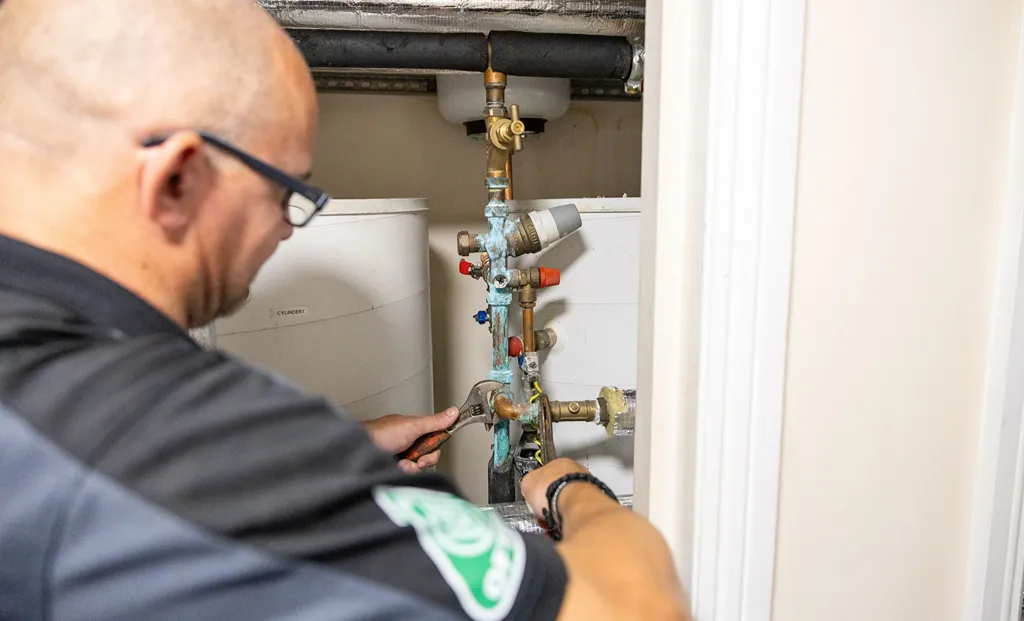
Plant room condition also has a direct impact on performance. Poor layout, restricted access, or outdated components can increase heat loss and limit system effectiveness. Targeted improvements such as hydraulic balancing, pipework insulation, and upgraded pumps help systems operate closer to their design performance, extend asset life, and support evolving energy standards.
How Smarter Controls Reduce Waste Without Disrupting Care
Heating controls play a decisive role in energy efficiency in care homes because they determine when heat is produced, where it is delivered, and how accurately systems respond to real demand. Poorly configured controls can lead to overheating, inconsistent comfort, and unnecessary energy use, particularly in buildings with varied occupancy patterns.
The Building Research Establishment’s (BRE) briefing on energy management and building controls states that energy represents around 40% of a building’s life costs and 50% of its running costs [3]. It also highlights that much of the UK building stock operates with controls rated Class D or worse under BS EN 15232, indicating significant scope for improvement through better zoning, scheduling, and monitoring.
In care homes, effective control strategies typically include:
Zoning to reflect how different areas are used
Optimum start and stop to avoid unnecessary heating hours
Weather compensation to reduce flow temperature when conditions allow
Boiler sequencing to match output to demand
Monitoring and targeting to identify abnormal energy use early
When connected to a building management system, these controls give operators clearer oversight of performance and reduce the need for manual intervention, supporting both comfort and efficiency. For more information, visit our Building Management Systems with Remote Monitoring service page.
Managing Energy Efficiency Without Increasing Clinical Risk
Energy efficiency in care homes must always be delivered within a framework of clinical safety and regulatory control. Heating and hot water systems directly affect indoor temperatures and water hygiene, both of which have implications for resident health and inspection outcomes.
The UK Health Security Agency’s guidance on safe water supplies, updated in January 2025, identifies Legionella as a key risk, particularly in systems with low usage or stagnant water [4]. It states that organisations should have a documented risk assessment and Water Safety Plan in place, and notes that Legionnaires’ disease is fatal in around 10% of cases. The guidance highlights dormant systems and inconsistent temperature control as common contributing factors.
For care homes, this reinforces the need for structured monitoring, regular checks, and competent oversight of Legionella Risk Assessment and Testing alongside heating performance.
Take Control of Energy Costs Without Compromising Care
Managing energy efficiency in care homes involves multiple interdependent factors, including system performance, compliance obligations, budget planning, and contractor oversight. When these areas are managed separately, gaps in responsibility and documentation can emerge, increasing operational risk over time.
Asbury Heating supports care home operators by coordinating system improvements, planned maintenance, and responsive support within a single, accountable framework. This approach aligns technical decisions with regulatory expectations and the practical realities of day-to-day care delivery. By providing clear advice and structured support, Asbury helps care homes maintain reliable heating and hot water while gaining greater control over energy use and long-term costs.
Seasonal heating care home checks confirm boilers, pipework and controls are safe before winter. These help care homes maintain safe indoor conditions.
Care home heating partner choice comes down to compliance knowledge, emergency response, records, and planned maintenance that keeps care homes running.
Hot water compliance in care homes is a regulatory requirement. A care home cannot operate safely or compliantly without a working hot water supply today.
Reducing heating breakdowns in care homes needs planned servicing, documented inspections, and lifecycle planning to cut failures and support compliance.