Commercial Air Conditioning Service Frequency Explained
A facilities manager at a Hampshire hotel found out mid-July, mid-heatwave, that nobody could say when the air conditioner (AC) had last been properly checked. The contract mentioned regular servicing, but nobody could point to a date, a charge tier, or a leak-check record. Most facilities managers are unable to state the frequency of their commercial air conditioning service without digging out the contract first.
That gap costs money either way. You pay for visits a low-charge system never needed, or a higher-charge system runs unchecked between the legal minimum and a fault nobody caught in time. The F-Gas Regulations set the minimum by charge tier, not by habit, and our team works the interval out from there based on your actual system and sector.
Here’s what that legal floor actually looks like, and what should tighten it further.
How Often Should Commercial AC Be Serviced?
Start with the legal floor, which is more specific than most people expect. Under the F-Gas Regulations, leak-check frequency depends on the amount of F-gas in your equipment, measured in CO2-equivalent tonnes. Per Environment Agency (EA) guidance, that is at least every 12 months for 5 to under 50 tonnes CO2-equivalent, and every 6 months for 50 to under 500 tonnes [1].
The 3-month cycle some guides quote for the largest systems is narrower than it sounds. It applies specifically to electrical switchgear and organic Rankine cycle equipment with a capacity of 500 tonnes or more installed before 1st January 2017. Other equipment at that threshold must instead have automatic leak detection fitted, which doubles the allowed interval.
There is a second, separate requirement often muddled with the first. Systems rated above 12kW also need an inspection at least every 5 years, according to the Ministry of Housing, Communities and Local Government’s (MHCLG) guide to air conditioning inspections [2]. That is a separate check on a longer cycle, looking at efficiency rather than refrigerant containment.
What This Means in Practice
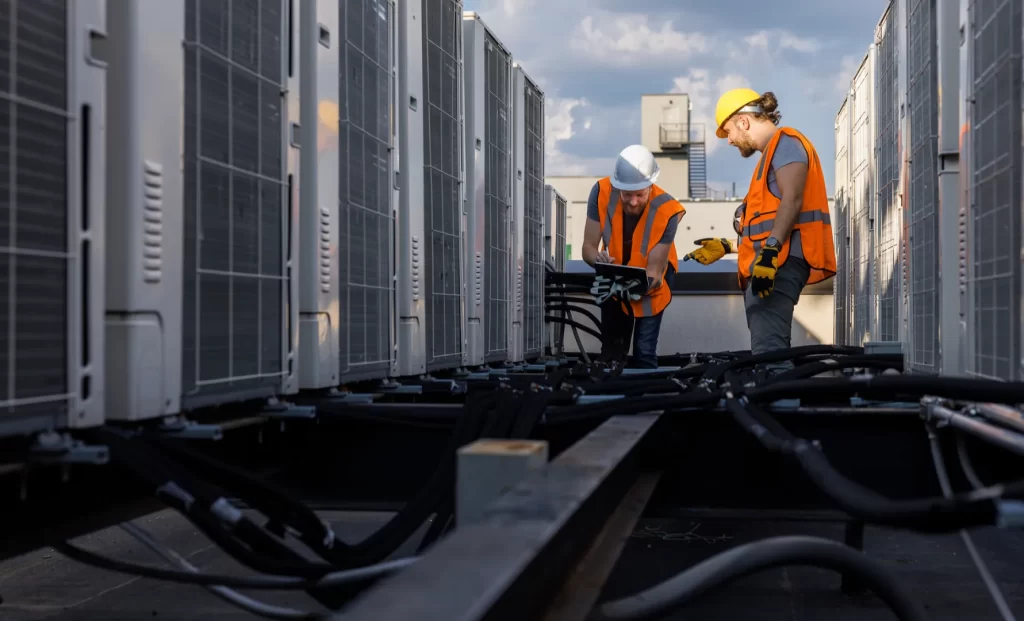
For most commercial buildings, that means an annual planned service as the baseline. Larger systems and higher-occupancy buildings, such as hotels, care homes, or leisure facilities, where the AC runs harder and longer, typically switch to twice-yearly maintenance.
The legal minimum is a floor, not a target. Several factors push the sensible interval below it, sometimes well below:
Round-the-clock buildings, such as hotels, require tighter cycles.
Older systems drift out of tune and fail more often.
Care homes need tighter servicing than the minimum required by law.
None of these work in isolation. A newer, low-charge system in a quiet office can sit at the annual minimum, but an older, high-charge system in a busy hotel should not. Older units are also more likely to reach the point where another repair costs more than it’s worth, which is worth knowing before you commit to another year of callouts.
What a Proper Commercial AC Service Includes
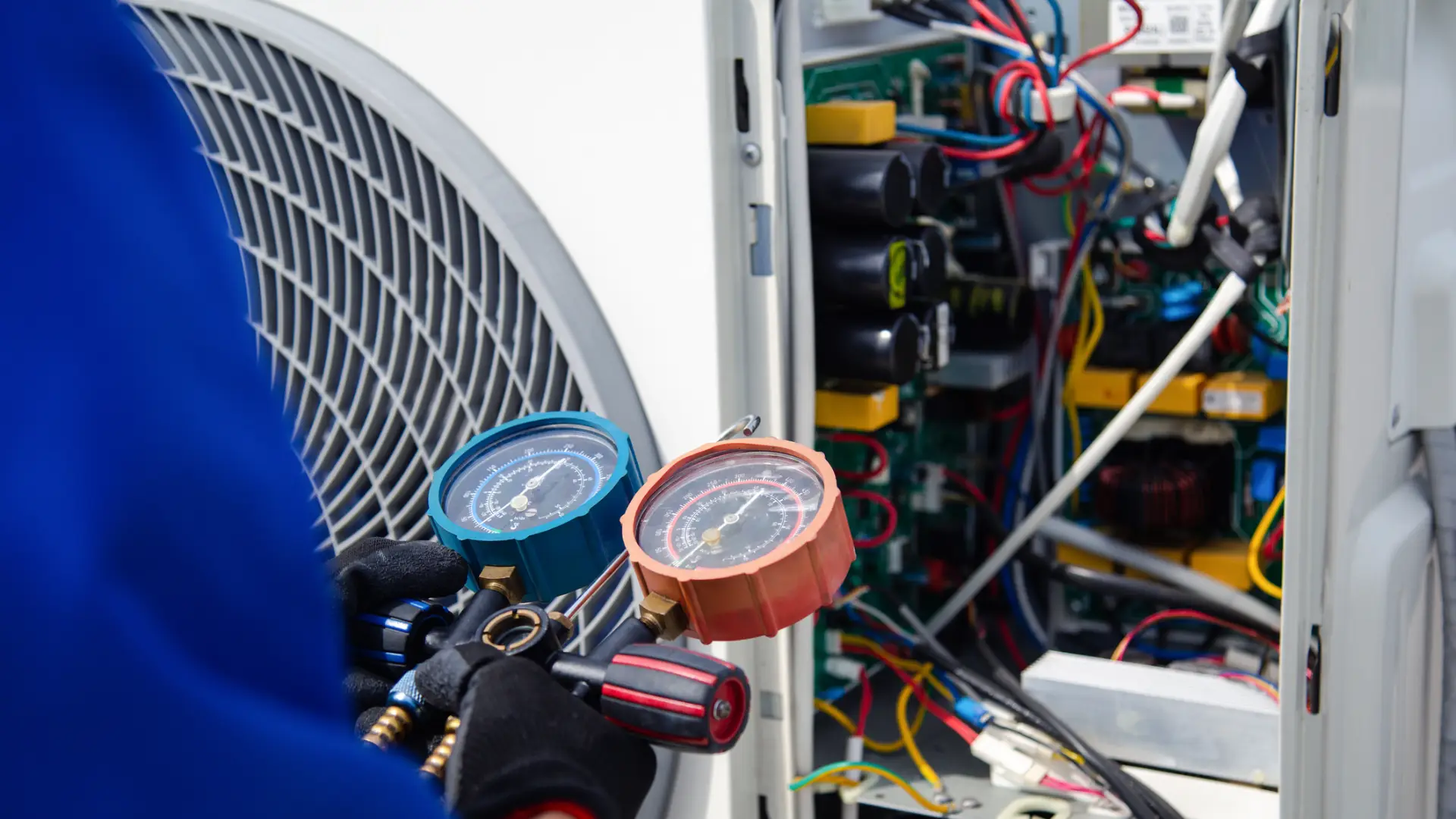
If you are unsure whether your provider’s visits constitute proper service or a quick filter change, this is what should be on the list. A genuine commercial AC service covers filter cleaning or replacement, and a refrigerant leak check appropriate to your charge tier. It also covers coil and condenser inspection, plus a check of controls against how the building is used, not the manufacturer default.
It should also include the paperwork. Under EA guidance on recording F-gas in equipment you own or service, operators holding 5 tonnes of CO2-equivalent F-gas or more must keep five years of records [3].
That record must cover:
Gas quantities installed and added during any maintenance visit.
Leak check dates and results, plus recovery or disposal details.
The servicing company’s name, address, and certificate number.
Our engineers are F-Gas registered, one of the accreditations the team holds alongside Gas Safe, OFTEC, and SafeContractor status, so this documentation is built into every visit. If a service visit skips any of the above, it is worth asking your provider what you are actually paying for.
Get Your Service Interval Right
Most commercial AC contracts run on a number nobody has checked since the day it was signed. That number is either too cautious for a low-risk system or too loose for a high-charge, high-use one. The better position is an interval set against your actual refrigerant charge, usage pattern, and sector requirements, with the compliance paperwork already in place to prove it.
Asbury has been a contract heating and air-conditioning specialist across Dorset, Hampshire, and Wiltshire since 1962. Our engineers are F-Gas certified and SafeContractor-accredited, with 24/7 emergency cover available to registered contract clients. We do not sell a fixed schedule off the shelf; instead, we work out the one your system and your sector actually need and document it properly.
Call 01202 745189 or book a site survey to find out whether your current schedule is right for your system, or just what came with the contract.
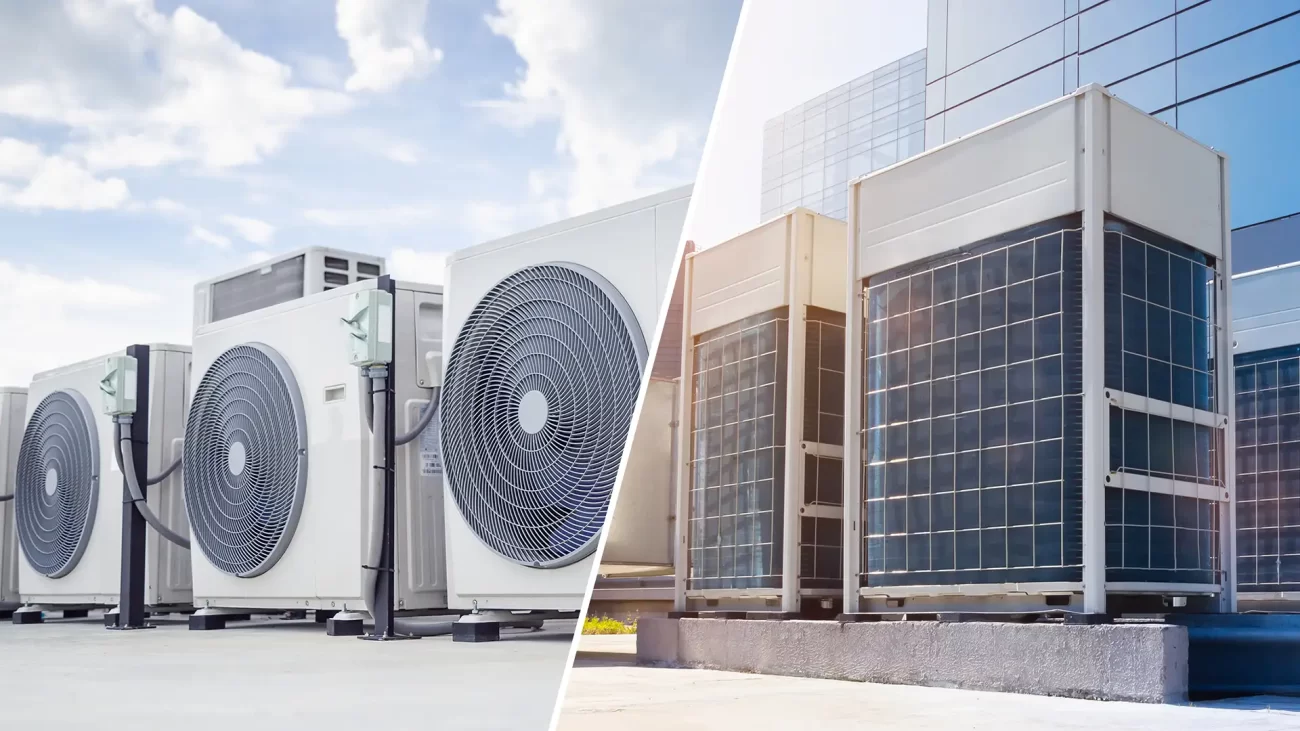
Split systems suit single-zone buildings at a lower fixed rate. VRF suits multi-zone buildings, with independent zoning cutting energy waste by up to 20%.
Frequent breakdowns, rising energy costs and poor airflow are signs your AC system may be past cost-effective repair. A site survey gives you the answer.
Optimising your combined HVAC system can help reduce energy consumption, lower costs, and contribute to sustainability goals. Book a consultation today.