Signs Your Commercial Air Conditioning System Needs Replacing
A facilities manager at a hotel in Bournemouth spent three summers calling out engineers for the same system. Different faults each time, every repair feeling like progress, but none of it addressing the real problem: the system was 16 years old, running on a restricted refrigerant, and in overall decline. The decision to replace came two years and several thousand pounds later than it should have.
Commercial air conditioning replacement decisions are deferred because each fault appears to be a maintenance issue rather than evidence of broader decline. The risks of continuing to repair include:
Escalating refrigerant costs as F-Gas supply restrictions tighten.
Reactive callout bills that erode the budget without restoring reliability.
The growing likelihood of full system failure at the worst moment.
This guide covers the indicators to look for and the factors to weigh when making the decision.
How Long Should a Commercial Air Conditioning System Last?
A well-maintained commercial AC system typically operates effectively for 15 to 20 years, though performance and efficiency often begin to decline before then, particularly when maintenance has been inconsistent. Age is a useful reference, but it does not tell the whole story. A 12-year-old system serviced annually can outperform an 8-year-old system that is poorly maintained, because the condition of compressors, heat exchangers, and controls reflects accumulated maintenance decisions more accurately than the installation date alone.
UK regulations require commercial air conditioning systems to be inspected every five years by an accredited energy assessor, with a £300 fine for non-compliance. The assessor issues a certificate and report covering current efficiency, faults identified, and recommendations for improvement, and those records give a clear picture of system condition over time. A pattern of declining efficiency ratings or recurring faults across successive reports warrants action [1].
Warning Signs Your Commercial AC System Needs Replacing
Several indicators point clearly toward a system that has moved beyond cost-effective repair. None of them in isolation is necessarily conclusive, but together they make a strong case for a replacement assessment.
AC Breakdowns Are Becoming More Frequent
One or two faults over a system’s lifetime is normal. When callouts become routine, whether the same component failing repeatedly or different faults emerging in quick succession, the pattern matters more than any individual repair. Each repair only addresses the most recent fault in a system that is failing across multiple points.
Energy Bills Are Rising without A Clear Cause
An AC system losing efficiency draws more power to achieve the same output. If energy bills have risen over recent years and usage patterns have not changed, the system’s energy consumption is a likely contributor. Older equipment operating outside its optimal range can account for meaningful increases in running costs that a replacement unit would avoid.
Poor Airflow or Uneven Temperature Distribution
Inconsistent temperatures across zones, weak airflow from vents, or areas of a building that never reach a comfortable temperature are signs that the system is struggling to perform. In some cases, these are maintenance issues, such as blocked filters or failing fan motors, but in an older system, they often reflect a more fundamental decline in capacity or control.
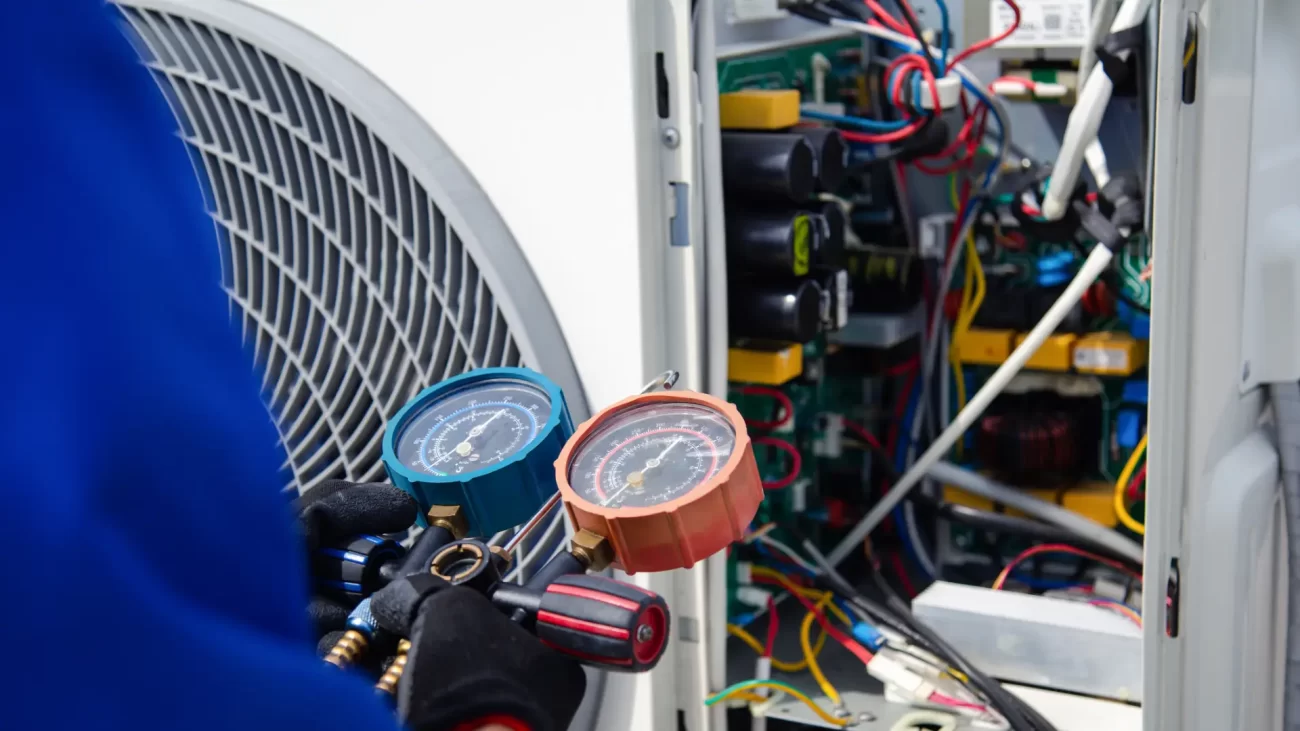
Refrigerant Leaks & F-Gas Compliance Concerns
Refrigerant leaks are both a performance issue and a compliance concern. The F-Gas regulation, which came into effect in 2015, has progressively reduced the supply of high global warming potential (GWP) refrigerants. R404a carries a GWP 3,922 times that of CO2, meaning one tonne emitted is the environmental equivalent of releasing 3,922 tonnes of CO2. Refrigerant prices surged 800% in 2017 due to supply restrictions, and the phase-down has continued since. A system that leaks and runs on a high-GWP refrigerant incurs growing regulatory and cost liabilities, not just an efficiency problem [2].
Repair Costs Are Approaching Replacement Value
When the cost of a single repair approaches a significant share of what a new system would cost, the case for replacement strengthens. Spending £4,000 on a compressor in a system that would cost £12,000 to replace is defensible if the system is otherwise sound, but spending the same on a 17-year-old system with a history of faults is a different calculation.
Repair or Replace? How to Make the Decision
Cost of repair as a proportion of replacement value is the clearest starting point. A useful working rule is that when a single repair exceeds 30-50% of the system’s current replacement cost, replacement is the more rational investment, particularly for a system past the midpoint of its expected lifespan. Age, parts availability, and energy efficiency ratings should all factor into that calculation.
Three further considerations compound the case for replacement:
A system on a restricted refrigerant carries a cost exposure that grows regardless of the next repair quote.
A system with hard-to-source parts poses a reliability risk that maintenance alone cannot resolve.
A modern system under a commercial maintenance contract typically operates at considerably higher efficiency than the unit it replaces.
Time to Take Stock of Your System
If your system is showing several of the signs in this guide, continued repair is not necessarily wrong, but it deserves more than a quote from the last callout. The pattern of faults, the refrigerant the system runs on, and likely repair costs over the next few years all factor into whether the next fix is money well spent. A site survey gives an accurate account of where the system stands and what replacement would actually involve.
Asbury Heating has provided commercial heating, air conditioning, and facilities management services since 1962. F-Gas certified engineers carry out commercial AC assessments, servicing, and replacement across Dorset, Hampshire, Wiltshire, East and West Sussex, and Surrey, working with facilities managers, hotels, care homes, schools, and property management companies.
Call 01202 745189 or arrange a site survey to get an accurate assessment of your system before the next callout makes the decision for you.
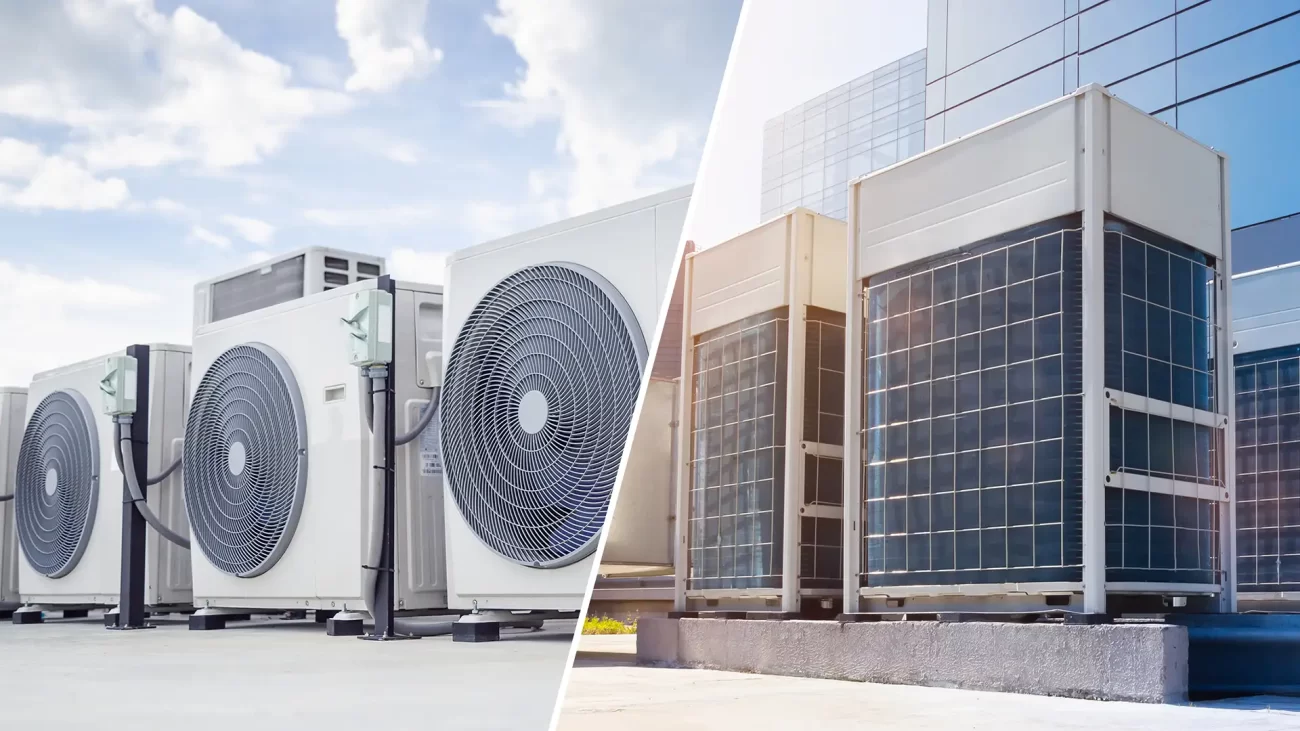
Split systems suit single-zone buildings at a lower fixed rate. VRF suits multi-zone buildings, with independent zoning cutting energy waste by up to 20%.
Optimising your combined HVAC system can help reduce energy consumption, lower costs, and contribute to sustainability goals. Book a consultation today.