Can Care Homes Operate Without Hot Water? UK Compliance
It is early morning in a care home, and routines are underway, but the hot water supply has stopped. If this sounds familiar, beware. Your care homes’ hot water compliance has become an immediate practical issue that will affect your resident’s hygiene, dignity and infection control.
Hot water is a regulatory requirement in UK care settings. Providers must maintain reliable systems that support safe care delivery and appropriate temperature control. When supply fails, assisted bathing, clinical cleaning and laundry processes are disrupted, increasing safeguarding risk. Under the Health and Social Care Act 2008 Regulations, premises must remain clean, suitable and properly maintained [1]. For operators and estates teams, the question is not whether a care home can continue to operate without hot water, but for how long?
This guide outlines the legal position, operational risks, and the structured maintenance approach that support compliant, uninterrupted care.
The Legal Standards That Protect Residents
Care homes’ hot water compliance falls under the Care Quality Commission’s (CQC) Fundamental Standards, which require care and treatment to meet minimum safety and quality thresholds [2].
In practice, this means water systems must be safe, monitored and capable of supporting effective infection prevention. Providers are expected to operate premises and equipment in a way that protects health, safety and dignity.
Hot water systems in care homes should:
Maintain safe outlet temperatures for personal care.
Control storage and distribution temperatures consistently.
Reduce the risk of scalding and bacterial growth for residents.
Be routinely inspected, recorded, and reviewed by staff.
Sit within a clear governance and audit framework.
The Health and Safety Executive (HSE) advises that Legionella bacteria multiply between 20°C and 45°C. To reduce this risk, hot water is typically stored at 60°C or above, distributed at 50°C or above, and cold water is kept below 20°C [3].
Where scald risk exists, thermostatic mixing valves should be installed close to outlets. Sentinel outlets must be checked monthly, storage temperatures must be monitored monthly, and cold water tanks must be reviewed at least every six months.
What Happens if a Care Home Has No Hot Water?
Under CQC Regulation 15, providers are legally responsible for ensuring premises and equipment remain operationally safe and appropriately maintained, even where maintenance is outsourced [4].
If hot water becomes unavailable, inspectors will expect immediate risk assessment and clear evidence that corrective action has been prioritised. Regulation 15 guidance confirms that any identified shortfalls must be addressed without delay.
Where disruption continues, providers should be able to demonstrate:
How hygiene standards are being temporarily maintained.
What interim controls are in place.
When full-service restoration is expected.
Prompt intervention supports regulatory compliance and reduces operational risk. Where required, structured emergency heating repairs can help restore safe operation efficiently.
Where urgent intervention is required, structured Emergency Heating Repairs support rapid restoration of compliant operation.
Why Hot Water Systems Fail in Care Environments
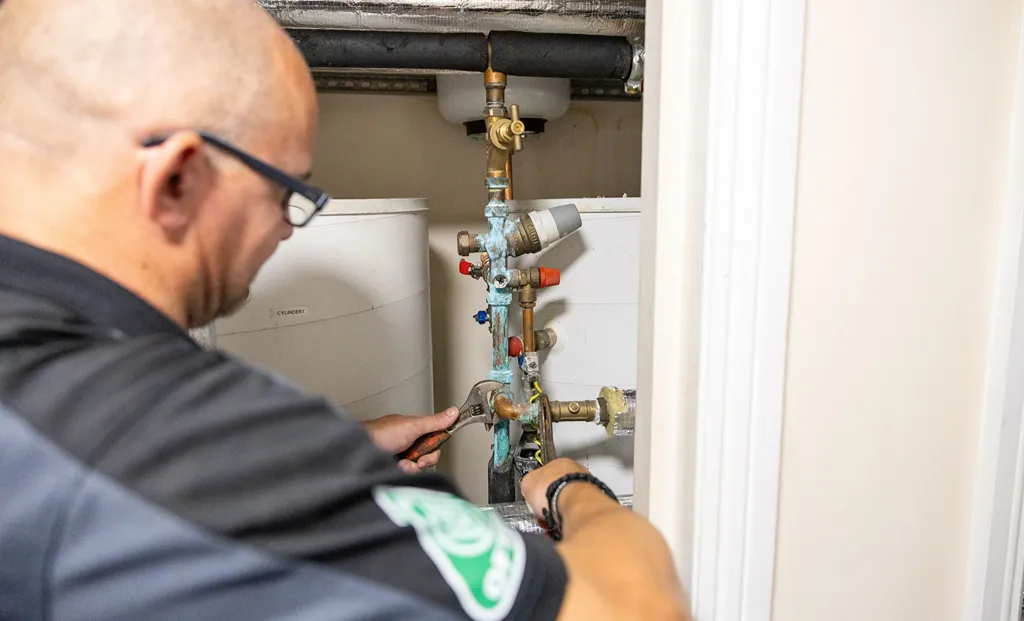
Hot water instability in care homes is often linked to ageing plant, sustained demand or inconsistent servicing. Boilers, calorifiers and circulation pumps operate continuously and require structured oversight.
Common causes include:
Component wear in older commercial boilers.
Scale build-up affecting heat transfer.
Circulation pump or control failures.
Gaps in temperature monitoring records.
Without routine inspection and servicing, minor faults can escalate into wider system disruption. Commercial Boiler Servicing helps maintain consistent performance and temperature control.
Care homes’ hot water compliance relies on consistent oversight and clear accountability. Facilities teams should integrate water safety into risk registers, planned maintenance schedules and inspection documentation. We’ve written more on this in our blog, Why Reducing Heating Breakdowns in Care Homes Is Risk-Driven.
However, an effective compliance framework includes:
Named responsibility for water system management.
Documented monthly and six-monthly temperature checks.
Clear escalation procedures when anomalies occur.
Up-to-date logs for servicing and repairs.
Contingency planning for temporary hot water outages.
Inspection teams may review maintenance logs, temperature records, and risk assessments to confirm that systems are consistently monitored. Planned Maintenance Contracts provide structured support, while coordinated Facilities Management improves performance visibility across multi-site estates.
Safe Care Begins Behind the Scenes
Reliable hot water systems underpin hygiene, safeguarding and infection prevention in care homes. Care homes’ hot water compliance depends on consistent monitoring, documented controls and proactive maintenance.
When supply is disrupted, clear corrective action and transparent records help protect residents and support inspection outcomes.
Asbury Heating works with care providers to maintain stable, compliant hot water systems through planned servicing, reactive support and system upgrades where required.
Care home heating partner choice comes down to compliance knowledge, emergency response, records, and planned maintenance that keeps care homes running.
Reducing heating breakdowns in care homes needs planned servicing, documented inspections, and lifecycle planning to cut failures and support compliance.
Good energy efficiency in care homes comes from reliable system design, planned maintenance, and effective control. Reduce waste and keep comfort steady.