A facilities manager for a care home group once described their boiler replacement as the most stressful fortnight of the year. Not because the boiler installation went wrong, but because nobody had told them it would take a fortnight.
The procurement was rushed, the commissioning window was overlooked, and the temporary heating provision arrived two days late. Most facilities managers focus on the visible work and overlook everything surrounding it. Contractual elements like the survey, the specification, the procurement window, and the compliance sign-off.
Miss any of those, and a two-week installation becomes a six-week problem.
How Long Does a Commercial Boiler Installation Take?
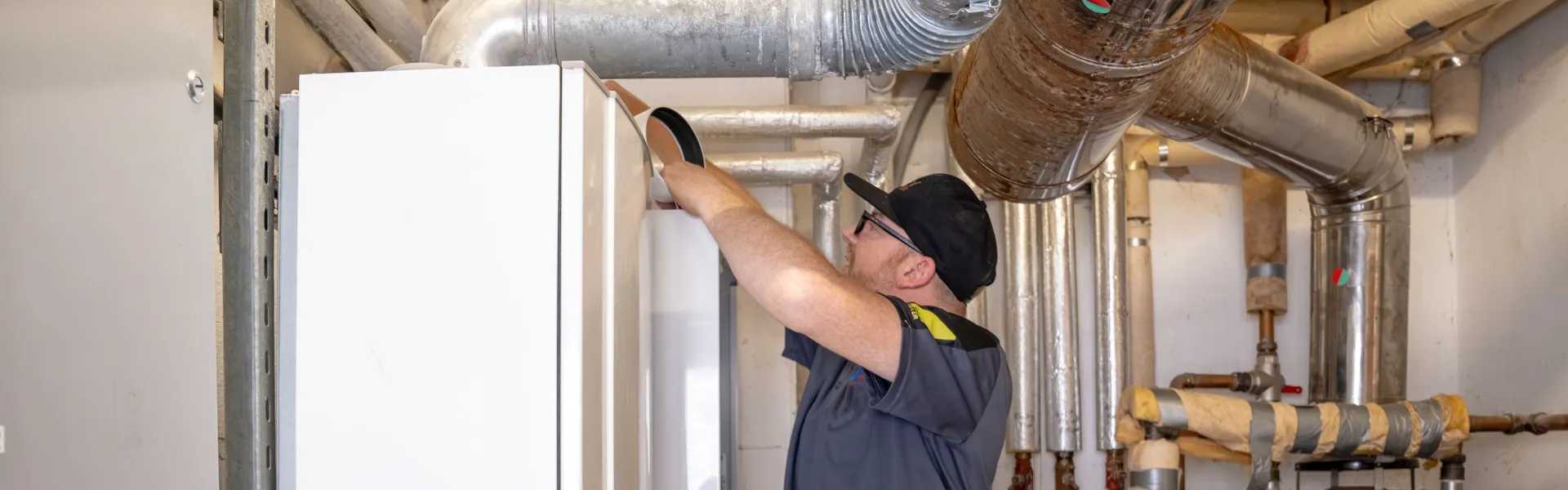
A straightforward like-for-like boiler replacement in a smaller commercial premises usually takes two to five days from installation start to handover. A multi-boiler plant room upgrade, or any project involving new pipework, structural access, or a cascade system, will usually run from two to six weeks once works begin.
The total elapsed time from initial enquiry to completion, including survey, specification, procurement, and commissioning, is usually four to twelve weeks, depending on system complexity and equipment lead times. The ranges below provide a practical reference by project type, covering only the physical installation. Add two to four weeks at the front for survey, specification, and procurement, and approximately one week at the back for commissioning and documentation.
The following durations cover installation only:
A like-for-like single boiler replacement can take two to five days. Access, flue position, and pipework condition are the main variables.
A new boiler with revised pipework or controls can take one to two weeks. Structural access, system redesign, and controls work all affect pace.
A cascade or multi-boiler plant room can take two to six weeks. Sequencing, temporary heating, and commissioning complexity each add time.
A full plant room replacement or upgrade can take four to eight weeks. Procurement lead times and phased working define the programme.
An emergency like-for-like replacement can take one to three days. Speed depends on parts availability and contractor supplier relationships.
For a Hampshire care home where the hot water system had reached end of life, our team completed a full system upgrade while the home remained in operation. This is the kind of phased coordination that occupied care environments specifically require.
What the 5 Stages of an Installation Involve
Understanding each stage makes it easier to plan around your building’s operational demands. The sequence below applies to most commercial heating programmes, from a single boiler swap to a full plant room upgrade.
Site Survey & Feasibility
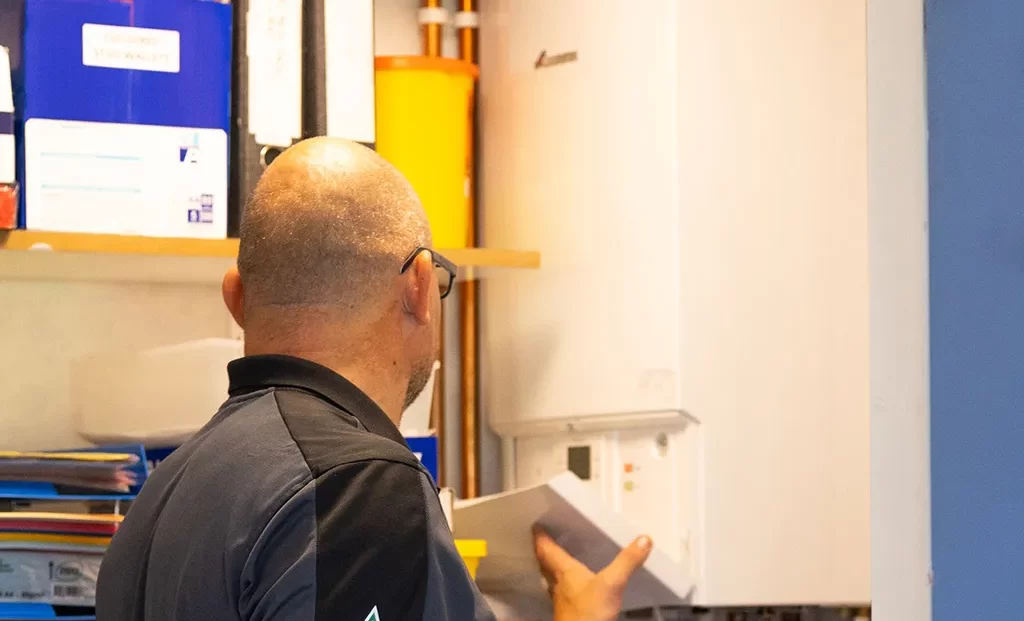
A qualified engineer assesses the existing plant, heating load, flue routes, and access points. This usually takes half a day to a full day on site, followed by time for the engineer to produce a specification. A thorough survey is what makes the rest of the process predictable.
Design, Specification, & Quotation
The specification covers boiler selection, pipework design, controls strategy, and any associated works. For larger or more complex projects, M&E drawings may be required. This stage usually takes one to two weeks.
Procurement & Equipment Lead Times
Standard commercial boilers from established manufacturers are usually available within two to three weeks. Specified or bespoke equipment can take four to eight weeks. Plant room upgrades requiring multiple components from different suppliers require careful sequencing to avoid stalling mid-programme.
Installation & Commissioning
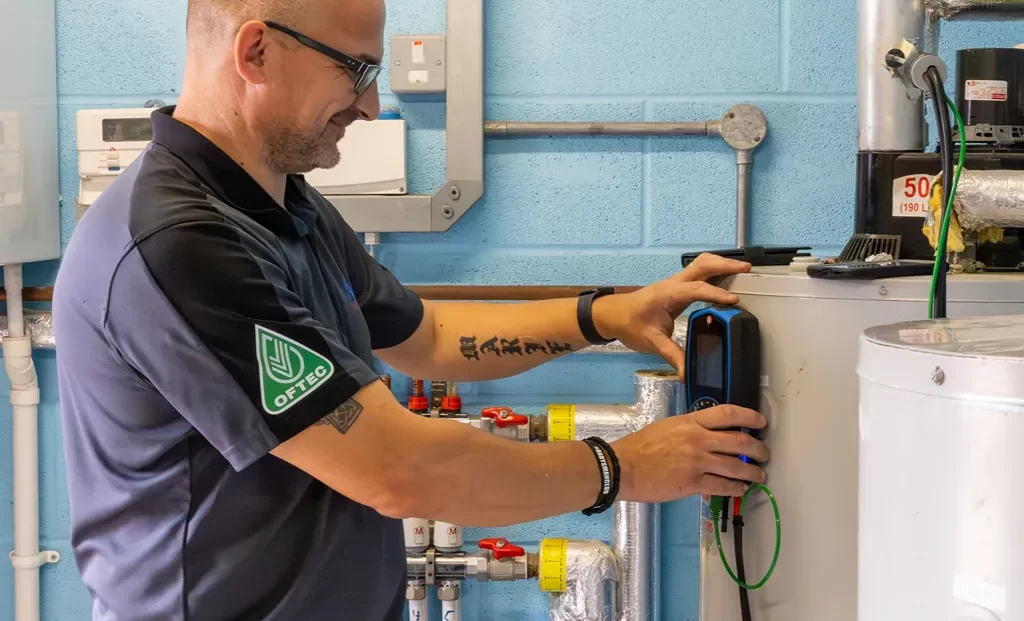
Physical installation runs to the durations shown above. Commissioning follows immediately, with the engineer balancing the system, confirming that controls are operating correctly, testing safety devices, and producing the documentation required for handover.
Handover, Training, & Ongoing Maintenance
At handover, the client receives all commissioning records, Gas Safe certificates, and manufacturer documentation. Where a planned preventative maintenance contract is in place, the first service interval is agreed at this point.
What Influences the Timeline Most
Several factors have a greater bearing on the final timeline than the boiler’s size. Understanding them at the planning stage means fewer surprises once work begins.
System Size & Complexity
A single boiler in an accessible plant room is a very different programme from a cascade system feeding multiple zones across a large building. The more interdependencies in the system, the more carefully the sequencing needs to be managed.
Building Access & Occupied Premises
Work in occupied environments such as care homes, schools, and hotels requires careful coordination. Residents and occupants cannot tolerate extended periods without heat or hot water, which means phased works and temporary heating provision are often necessary. Each sector has its own scheduling constraints, and installation programmes need to reflect them.
Compliance & Regulatory Requirements
Under UK Building Regulations, all gas boiler installations must be carried out by a Gas Safe-registered engineer. The Planning Portal (PP) confirms that this applies to both commercial and domestic premises. Following installation, the Gas Safe-registered engineer must notify the relevant local authority within 30 days, as set out by the Gas Safe Register (GSR) [1] [2].
Manufacturer Lead Times
Current lead times for commercial boilers vary by manufacturer and specification. For planned replacements, early specification protects your programme. For emergency replacements, a contractor with established supplier relationships can often source equipment faster than the market average.
How to Keep Disruption to a Minimum
Most disruption during a commercial installation is not inevitable. It is the result of inadequate planning. The following measures make the difference between an installation that runs alongside normal operations and one that causes problems:
Phased works keep one section of the system running while another is replaced, protecting heat and hot water continuity.
Temporary boiler provision covers periods when the primary system is offline and should be arranged before work begins.
Out-of-hours and weekend windows suit premises where daytime operations make access impractical.
Clear communication with site teams, including a programme of works document, milestones, and a named site lead, avoids delays.
Early contractor engagement, before procurement is finalised, gives the programme the time it needs to run without compression.
In one emergency case, a care home in Romsey lost both heating and hot water simultaneously. We restored full service under pressure, and showed what rapid mobilisation looks like when temporary provision is already part of the contract arrangement.
Plan the Work Around Your Operational Calendar
Commercial boiler installations planned reactively tend to run into problems. Procurement is often compressed, commissioning squeezed, and the programme ends up overlapping the heating season rather than preceding it. With the right preparation, the same project is straightforward: surveyed and specified in spring, procured over summer, and commissioned before temperatures drop.
Asbury Heating has delivered planned commercial heating programmes across Dorset, Hampshire, and Wiltshire since 1962. Our engineers are Gas Safe-registered, OFTEC accredited, and SafeContractor approved. CareGuard is available to care home groups that require structured lifecycle planning across multiple sites.
Annual checks, valid certificates, and the consequences of a lapse all sit with the commercial landlord, not the tenant, under UK gas safety regulations.
Gas safety, workplace temperature duties and boiler servicing records all form part of commercial heating legal requirements that UK employers must meet.
Boiler efficiency metrics show how much fuel becomes useful heat in a commercial building and how AFUE and thermal efficiency compare boiler performance.
Boilers with renewable energy integration combine a boiler with renewable heat sources to reduce fuel use and share heating demand in commercial buildings.
High capacity boilers improve heating in large buildings by delivering consistent output, strong flow rates and reliable performance across multiple zones.