Which Boiler Installer Certifications Are Required by Law?
Most boiler installations go without incident. The problems tend to surface later, when an insurer asks for documentation, or a gas safety check uncovers work that was never registered. The installation is non-compliant, the warranty is void, and the insurance claim is refused.
That sequence of events is not unusual, and in commercial settings, such as care homes, schools, or hotels, the duty of care owed to staff and residents makes the consequences even more serious. Boiler installer certifications exist to prevent exactly this. Gas Safe, Oil Firing Technical Association (OFTEC), Heating Equipment Testing and Approvals Scheme (HETAS), and SafeContractor each cover a specific scope of work.
This guide explains what each certification covers and why checking registrations before an appointment matters.
The Legal Obligations Behind Every Boiler Installation
Gas and oil boiler installation sits within a framework of legal obligations. Under the Gas Safety (Installation and Use) Regulations 1998, anyone carrying out gas work in the UK must be registered on the Gas Safe Register [1] [2]. This is not a professional mark of quality. It is a legal requirement and the consequences of using an unregistered engineer are serious.
In January 2026, Health and Safety Executive (HSE) prosecuted an unregistered gas fitter whose installation was classified as immediately dangerous, resulting in a suspended custodial sentence [3].
Work carried out by an unregistered engineer is non-compliant, may void your building insurance, and can invalidate manufacturer warranties from day one.
Beyond gas, the type of system being installed determines which certification applies. Oil-fired installations require OFTEC registration. Biomass and solid-fuel appliances are regulated by HETAS. Where electrical connections form part of the scope, an NICEIC or equivalent qualification covers that element of the work.
For commercial clients, SafeContractor approval provides independent verification that a contractor meets health and safety obligations and operates to best-practice standards, before they set foot on site.
The certification required depends on the type of system being installed. Here is what each registration covers and why it matters.
Gas Safe Register
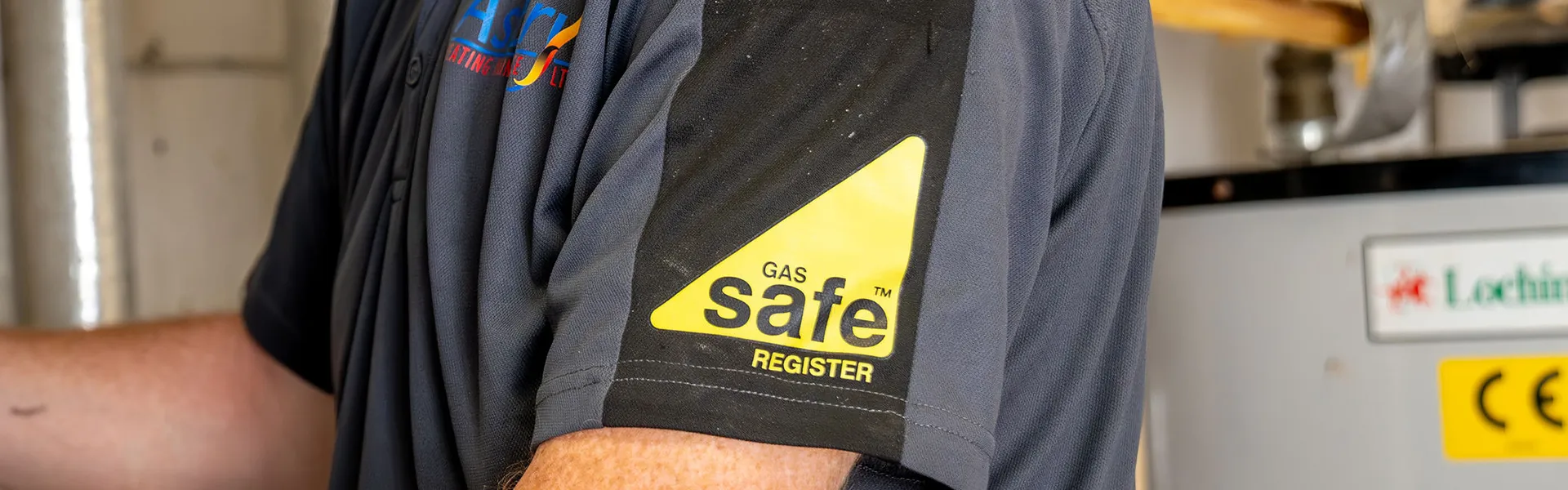
The Gas Safe Register replaced CORGI registration in 2009 and is the only legally recognised body for gas work in Great Britain. Under the Gas Safety (Installation and Use) Regulations 1998, registration applies at both business and engineer level. The company must be registered, and every engineer must hold current certificates of gas safety competence [4].
Each engineer carries a licence card confirming three things:
The engineer’s name, photograph, and registration period are shown on the front.
The specific work categories the engineer is qualified to undertake are listed on the reverse.
For commercial installations, those categories extend to larger systems with higher gas consumption and larger pipework than the domestic equivalent.
OFTEC Registration
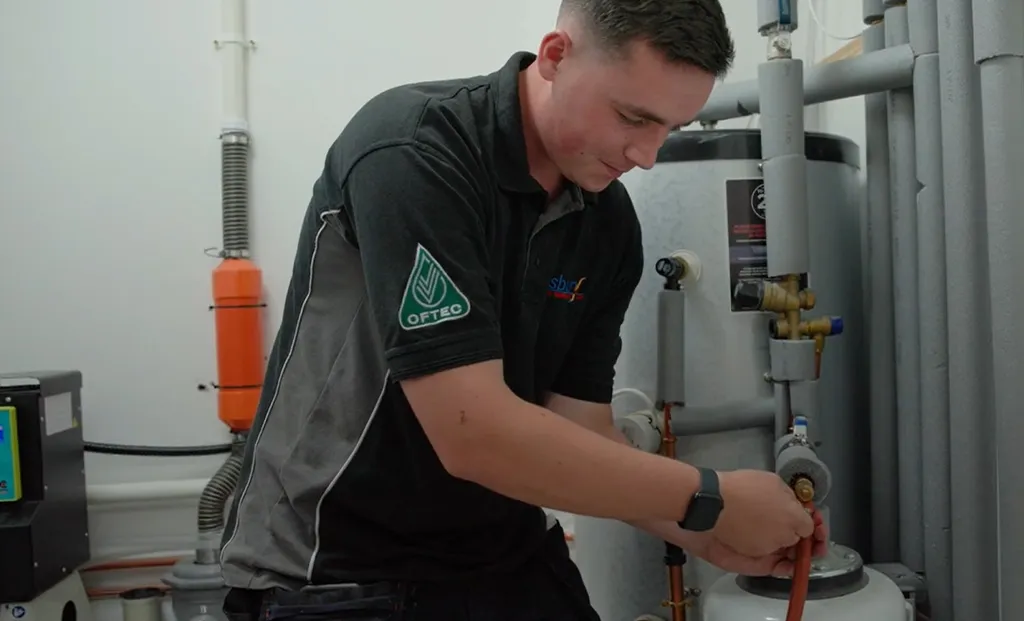
Oil-fired boiler installation and servicing falls under OFTEC. Registration applies at both the business and technician levels. Each technician must hold a current personal certificate of technical competence, and businesses are subject to initial evaluation and ongoing surveillance inspections [5].
In England and Wales, OFTEC-registered businesses can self-certify oil installation work under the Competent Person Scheme, issuing customers a building regulations compliance certificate backed by a six-year workmanship warranty.
Where a registered business ceases to trade, that warranty covers the cost of a third party rectifying any non-compliant work. Using an unregistered installer removes both the compliance certificate and that warranty protection.
HETAS Registration
For biomass boilers and solid-fuel appliances, HETAS is the only government-authorised Competent Person Scheme specialising in these technologies. Registered installers are assessed against specific competency categories covering appliances, flue liners, chimney systems, and connected heating and hot water works [6].
In England and Wales, HETAS-registered installers self-certify their work through the scheme, notifying the relevant Local Authority and issuing a building regulations compliance certificate. Failure to notify the Local Authority can be an offence resulting in enforcement action [7].
SafeContractor Approval
SafeContractor sits alongside technical certification rather than replacing it. As a founding SSIP member and UKAS-accredited scheme, it assesses contractors against health and safety, sustainability, and ethical compliance standards through a questionnaire, document review, and independent audit. Certification is renewed annually.
Certification is a baseline, not a static credential. Competent installers maintain their Gas Safe or OFTEC registration through ongoing assessments and stay up to date with changes to legislation, manufacturer guidance, and system technology. Under UK F-Gas regulations, it is against the law to work on equipment containing fluorinated gases without the correct qualifications. This applies to installation, servicing, maintenance, leak checks, and recovery of refrigeration, air conditioning, and heat pump systems. Individual engineers must hold the relevant category certificate from an accredited body.
For commercial buildings, engineers working on pressurised systems or Building Management System (BMS) integrated plant will typically hold additional qualifications for those system types.
Compliance, Risk, & the Cost of Getting It Wrong
An uncertified installation creates a risk that compounds over time. Insurance claims following a fire, leak, or carbon monoxide incident may be denied if the original installation cannot be demonstrated to comply.
GOV.UK guidance on landlord safety responsibilities requires landlords to meet three specific gas safety obligations [8]:
Landlords must ensure that gas equipment is installed and maintained by a Gas Safe-registered engineer.
Landlords must have an annual safety check carried out on each appliance and flue.
Landlords must provide tenants with a copy of the gas safety record within 28 days.
Certification does not guarantee a good installation, but its absence means the work is non-compliant from day one. For anyone specifying boiler installation works — whether for a single site or across a property portfolio — the certifications an engineer holds determine whether that work is legal, warranted, and insured. Checking registrations before an appointment is the most basic form of due diligence available.
Asbury Heating has held Gas Safe and OFTEC registrations since 1962 and is also F-Gas-qualified and SafeContractor-approved. The combination of which is required when specifying commercial boiler installations. Every engineer carries an individual certification, and documentation is provided as standard.
[1] GOV.UK, Health and Safety Executive (HSE), Gas Safety (Installation and Use) Regulations 1998 (GSIUR) As Amended. Approved Code of Practice and Guidance: https://www.hse.gov.uk/pubns/books/l56.htm